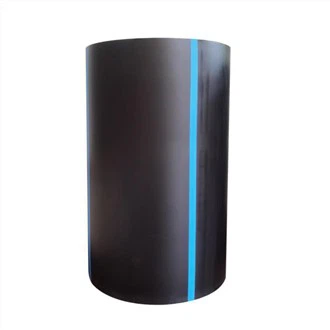
What is the weight of plastic hoses?
As a plastic hose supplier, I've been asked a multitude of questions from customers over the years. One query that stands out, perhaps unexpectedly, is about the weight of plastic hoses. It might seem like a straightforward topic, but in reality, the weight of plastic hoses is influenced by a variety of factors, and understanding these can be crucial for both suppliers and customers.
Factors Affecting the Weight of Plastic Hoses
The weight of a plastic hose is primarily determined by its material, dimensions, and wall thickness. Different plastic materials have different densities, which directly impact the weight. For instance, PVC (Polyvinyl Chloride) and HDPE (High - Density Polyethylene) are two commonly used materials in plastic hose manufacturing. HDPE has a relatively lower density compared to PVC, so for hoses of the same size, a PVC hose will generally be heavier.
The dimensions of the hose, including its length and diameter, also play a significant role. Naturally, a longer hose will weigh more than a shorter one of the same diameter and material. Similarly, a hose with a larger diameter will have more material and thus be heavier than a smaller - diameter hose of the same length and material.
Wall thickness is another critical factor. A hose with a thicker wall will have more plastic material, increasing its weight. This is important because the wall thickness often affects the hose's strength, durability, and resistance to pressure. For applications that require high - pressure resistance, hoses with thicker walls are used, which in turn are heavier.
Calculating the Weight of Plastic Hoses
To calculate the weight of a plastic hose, we can use a simple formula based on the volume of the plastic used and its density. The volume of a cylindrical hose can be approximated by the formula (V=\pi\times((D/2)^2-(d/2)^2)\times L), where (D) is the outer diameter, (d) is the inner diameter, and (L) is the length of the hose. Once we have the volume, we multiply it by the density of the plastic material to get the weight.
Let's take an example. Suppose we have an HDPE hose with an outer diameter of 50 mm (0.05 m), an inner diameter of 40 mm (0.04 m), and a length of 100 meters. The volume of the hose is (V=\pi\times((0.05/2)^2-(0.04/2)^2)\times100). After calculating, we get (V=\pi\times(0.000625 - 0.0004)\times100= 0.0706858\ m^3). The density of HDPE is approximately (940\ kg/m^3). So the weight of the hose is (W = V\times\rho=0.0706858\times940 = 66.444652\ kg).


Importance of Knowing the Weight
Knowing the weight of plastic hoses is essential for several reasons. From a logistics perspective, it helps in determining the shipping costs. Shipping companies often charge based on the weight and volume of the goods being transported. If you're ordering a large quantity of plastic hoses, a slight difference in weight can significantly impact the overall shipping cost.
For customers who will be handling the hoses on - site, the weight is also a crucial consideration. For example, in agricultural applications, workers may need to move and install hoses. A lighter hose is easier to handle, reducing the physical strain on the workers and potentially increasing productivity.
In construction projects, the weight of the hoses can affect the structural requirements. If the hoses are going to be suspended or installed in a way that puts additional load on the structure, the weight needs to be taken into account to ensure the safety and stability of the installation.
Our Product Range and Weight Variations
As a plastic hose supplier, we offer a wide range of products, each with its own weight characteristics. For example, our Large Diameter Hdpe Water Pipe is designed for large - scale water supply and irrigation systems. Due to its large diameter and thick wall, it is relatively heavy, but it also offers high - pressure resistance and long - term durability.
Our HDPE 6 Inch Corrugated Drainage Pipe has a unique corrugated design. The corrugations reduce the weight of the pipe while still maintaining its strength and flexibility. This makes it easier to install in various drainage applications, such as in building foundations or for surface water management.
If you're looking for a lightweight option for garden use, our Black Drip Hose For Garden is an excellent choice. Made from thin - walled HDPE, it is easy to handle and install, and its light weight allows for quick setup and movement around the garden.
Contact Us for More Information
Whether you're a contractor, an agricultural professional, or a homeowner, understanding the weight of plastic hoses can help you make the right choice for your specific needs. As a plastic hose supplier, we are committed to providing high - quality products and expert advice. If you have any questions about the weight of our plastic hoses, or if you're interested in placing an order, please don't hesitate to contact us. We look forward to discussing your requirements and helping you find the perfect plastic hose solution.
References
- "Plastic Pipe and Fittings Handbook" - This comprehensive handbook provides detailed information on the properties of different plastic materials used in pipe and hose manufacturing, including their densities.
- "Engineering Principles for Agricultural Systems" - Offers insights into the practical applications of plastic hoses in agriculture and the importance of considering factors such as weight for efficient system design.