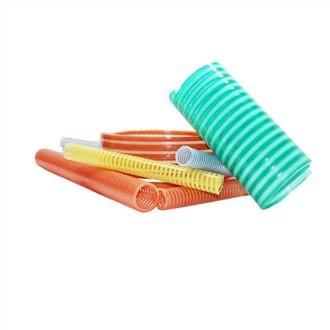
Hey there! As a supplier of PVC spiral hoses, I'm super stoked to share with you how to install these nifty hoses. PVC spiral hoses are widely used in various industries due to their flexibility, durability, and cost - effectiveness. Whether you're using them for water suction, air ventilation, or other fluid transfer tasks, proper installation is key to getting the most out of your hose.
Step 1: Gather Your Tools and Materials
First things first, you need to make sure you have all the necessary tools and materials at hand. You'll need your PVC spiral hose, of course. We offer a great range of options like the 6 Inch Suction Hose Pipe and the PVC Spring Wire Hose Pipe. Other tools you'll require include a sharp utility knife for cutting the hose to the right length, hose clamps to secure the connections, and maybe some lubricant to ease the installation process.
Step 2: Measure and Cut the Hose
Measure the distance where you need to install the hose. Make sure to account for any bends or curves in the path. It's always a good idea to add a little extra length, say a few inches, just in case. Once you've got the measurement, use your utility knife to cut the PVC spiral hose. Cut it as straight as possible to ensure a proper fit. If you're using the 4 Inch Suction Hose, be extra careful while cutting to maintain its integrity.
Step 3: Prepare the Connection Points
Inspect the connection points, such as the fittings or the equipment where the hose will be attached. Make sure they are clean and free from any debris or rust. If there are any rough edges, you can use a file to smooth them out. This will prevent any damage to the hose during installation and ensure a tight seal.
Step 4: Lubricate the Hose Ends (Optional but Recommended)
Applying a small amount of lubricant to the hose ends can make the installation process a whole lot easier. It helps the hose slide onto the fittings more smoothly, reducing the risk of kinking or damage. Just use a water - based lubricant to avoid any chemical reactions with the PVC material.
Step 5: Attach the Hose to the Fittings
Carefully slide the hose onto the fittings. Start by aligning the end of the hose with the fitting and then gently push it on. Make sure the hose goes on evenly and all the way onto the fitting. If it's a tight fit, you can use a little more force, but be careful not to over - stretch the hose. Once the hose is on the fitting, place a hose clamp over the connection point. Tighten the clamp using a screwdriver, but don't over - tighten it. You want it to be snug enough to prevent leaks but not so tight that it damages the hose.
Step 6: Check for Bends and Kinks
After attaching the hose to the fittings, take a look at the entire length of the hose. Make sure there are no sharp bends or kinks. If you find any, gently straighten them out. Sharp bends can restrict the flow of fluid through the hose and reduce its efficiency. You might need to re - position the hose or adjust the fittings to eliminate these issues.


Step 7: Test the Installation
Once everything is in place, it's time to test the installation. If it's a water - based system, turn on the water supply and check for any leaks at the connection points. If it's an air system, turn on the air source. Look for any signs of air or water escaping. If you notice a leak, tighten the hose clamps a little more. If the problem persists, you might need to remove the hose, check the fitting, and reinstall it.
Step 8: Secure the Hose
To prevent the hose from moving around during use, you can use hose supports or straps. These will keep the hose in place and reduce the stress on the connections. You can attach the supports at regular intervals along the length of the hose.
Common Installation Mistakes to Avoid
- Over - tightening the Hose Clamps: As I mentioned earlier, over - tightening can damage the hose. It can cause cracks or splits in the PVC material, leading to leaks.
- Using the Wrong Size Hose or Fittings: Make sure you select the right size of hose and fittings for your application. Using an incorrect size can result in poor performance and leaks.
- Not Cleaning the Connection Points: Debris or rust on the connection points can prevent a proper seal, leading to leaks.
- Ignoring Bends and Kinks: Sharp bends and kinks can significantly reduce the flow rate and put extra stress on the hose, potentially causing it to fail prematurely.
Why Choose Our PVC Spiral Hoses?
Our PVC spiral hoses are made from high - quality materials, ensuring long - lasting performance. They are resistant to abrasion, chemicals, and UV rays, making them suitable for a wide range of environments. We offer a variety of sizes and configurations to meet your specific needs. Whether you need a small - diameter hose for a home project or a large - diameter hose for an industrial application, we've got you covered.
If you're in the market for PVC spiral hoses or have any questions about installation, feel free to reach out. We're here to help you make the right choice and ensure a successful installation. Our team of experts can provide you with all the information you need and assist you in any way possible.
So, there you have it - a step - by - step guide on how to install a PVC spiral hose. With these tips, you'll be able to install your hose like a pro. If you have any more questions or need further advice, don't hesitate to get in touch. We're always happy to help you with your PVC spiral hose needs.
References
- "PVC Hose Installation Guide" - Industry Standard Manual
- "Best Practices for Fluid Transfer Hose Installation" - Professional Plumbing Handbook