Calculating the amount of PPR pipes needed for a project is a crucial step that can significantly impact the project's cost, efficiency, and overall success. As a PPR pipe supplier, I understand the importance of accurate calculations to ensure that our customers have the right materials for their projects. In this blog post, I'll share some key steps and considerations to help you calculate the amount of PPR pipes required for your project.
Step 1: Understand the Project Requirements
Before you start calculating the amount of PPR pipes, you need to have a clear understanding of the project requirements. This includes the layout of the plumbing system, the number of fixtures, and the specific needs of the building or area where the pipes will be installed. For example, a residential project may have different requirements compared to a commercial one. In a residential setting, you'll need to consider the number of bathrooms, kitchens, and other water - using areas. In a commercial building, such as a hotel or an office complex, the scale and complexity of the plumbing system will be much higher.
Step 2: Measure the Distances
Once you have a clear understanding of the project layout, the next step is to measure the distances where the PPR pipes will be installed. Use a measuring tape or other appropriate measuring tools to determine the length of each pipe run. Make sure to measure along the actual path of the pipes, taking into account any bends, turns, and vertical runs. For horizontal runs, measure from the starting point to the ending point of the pipe. For vertical runs, measure from the bottom to the top. It's important to be as accurate as possible in your measurements to avoid over - or under - estimating the amount of pipes needed.
Step 3: Account for Fittings and Joints
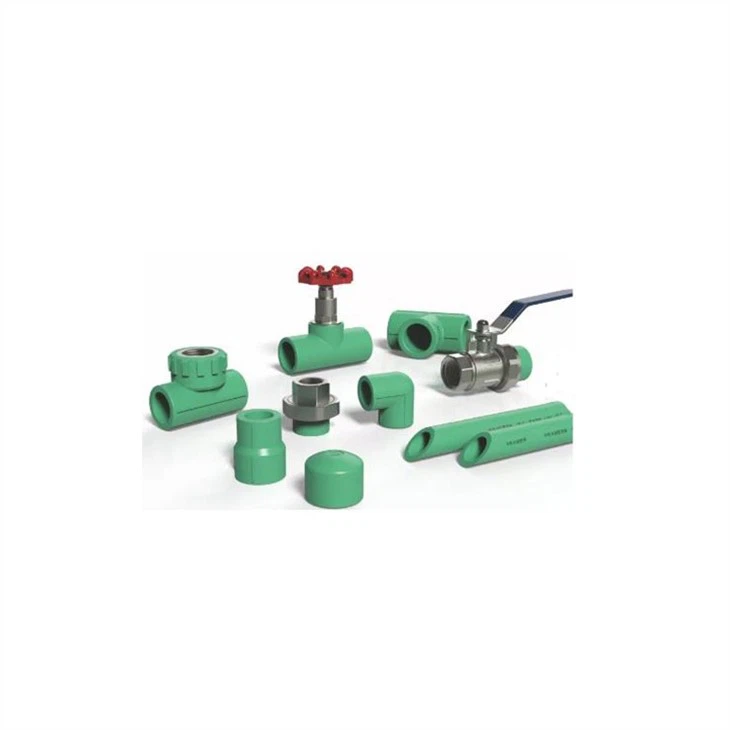
PPR pipes require fittings and joints to connect different sections of the pipes and to adapt to the layout of the plumbing system. When calculating the amount of PPR pipes, you need to account for the additional length that the fittings and joints will take up. Different types of fittings, such as elbows, tees, and couplings, have different sizes and will require different amounts of pipe length to be installed properly. As a general rule of thumb, you can estimate that each fitting will add a few centimeters to the total pipe length. For example, a 90 - degree elbow may add around 5 - 10 centimeters, depending on its size.
Step 4: Consider Pipe Sizing
PPR pipes come in different sizes, and the size of the pipe you choose will depend on the flow rate and pressure requirements of the plumbing system. Larger pipes are typically used for main supply lines where a higher volume of water needs to be transported, while smaller pipes are used for branch lines and connections to individual fixtures. When calculating the amount of PPR pipes, make sure to specify the correct pipe size for each section of the plumbing system. You may need to refer to plumbing codes and standards to determine the appropriate pipe size based on the number of fixtures and the expected water demand.
Step 5: Factor in Waste and Spares
It's always a good idea to factor in some waste and spares when calculating the amount of PPR pipes. During the installation process, there may be some cutting errors, damaged pipes, or unforeseen changes in the project layout. By adding a certain percentage (usually around 5% - 10%) to the total calculated pipe length, you can ensure that you have enough pipes to complete the project without running out. Additionally, having some spare pipes on hand can be useful for future repairs and maintenance.
Example Calculation
Let's say you're working on a small residential project with the following requirements:
- There are two bathrooms and one kitchen.
- The total horizontal pipe runs for the cold water supply are 20 meters, and the vertical runs are 5 meters.
- There are 10 elbows, 5 tees, and 15 couplings in the plumbing system.
- You've decided to use 20mm PPR pipes for all the branch lines and 25mm PPR pipes for the main supply line.
First, calculate the total length of the pipes without considering fittings:
Total length of horizontal runs = 20 meters
Total length of vertical runs = 5 meters
Total length without fittings = 20 + 5 = 25 meters

Next, account for the additional length due to fittings. Assuming each elbow adds 8 centimeters, each tee adds 10 centimeters, and each coupling adds 5 centimeters:
Total additional length from elbows = 10 * 0.08 = 0.8 meters
Total additional length from tees = 5 * 0.1 = 0.5 meters
Total additional length from couplings = 15 * 0.05 = 0.75 meters
Total additional length from fittings = 0.8 + 0.5+0.75 = 2.05 meters
Total length of pipes including fittings = 25 + 2.05 = 27.05 meters
Finally, factor in 10% for waste and spares:
Total length with waste and spares = 27.05 * 1.1 = 29.755 meters
So, for this project, you would need approximately 30 meters of 20mm and 25mm PPR pipes, depending on the distribution between the main supply line and the branch lines.
Importance of Accurate Calculation
Accurate calculation of the amount of PPR pipes is essential for several reasons. Firstly, it helps to control costs. By ordering the right amount of pipes, you can avoid over - spending on materials. Secondly, it ensures the efficiency of the installation process. Having the correct amount of pipes on site means that the installation can proceed smoothly without delays due to running out of materials or having to wait for additional pipes to be delivered. Finally, it contributes to the overall quality of the plumbing system. Using the right amount and size of pipes helps to ensure proper water flow and pressure, reducing the risk of leaks and other plumbing problems.
Where to Source PPR Pipes
As a PPR pipe supplier, we offer a wide range of high - quality PPR pipes that meet the highest industry standards. Our Plastic Pipe Polypropylene products are known for their durability, corrosion resistance, and excellent performance. Whether you're working on a small residential project or a large commercial one, we have the right pipes and fittings to meet your needs. Our Plumbers Ppr Pipe selection is designed to provide easy installation and long - term reliability. And our Plastic Polypropylene Pipes come in various sizes and thicknesses to suit different applications.
Contact Us for Your PPR Pipe Needs
If you're in the process of planning a project and need to calculate the amount of PPR pipes or have any questions about our products, we're here to help. Our team of experts can assist you with accurate calculations, provide technical support, and offer advice on the best pipe sizing and installation practices. Contact us today to start discussing your project requirements and to get a quote for our high - quality PPR pipes. We look forward to working with you to ensure the success of your project.
References
- Plumbing Codes and Standards Handbook
- PPR Pipe Manufacturer's Installation Guides