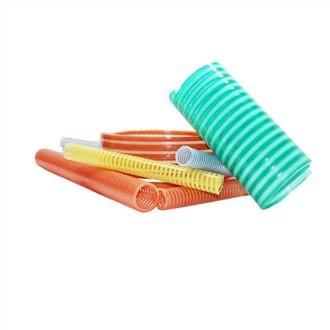
Hey there! As a supplier of PVC spiral hoses, I often get asked a bunch of questions about where these hoses can be used. One question that pops up quite a bit is, "Can PVC spiral hoses be used in rubber manufacturing?" Let's dig into this topic and find out.
First off, let's talk a bit about PVC spiral hoses. These hoses are pretty awesome. They're made from polyvinyl chloride (PVC), which is a type of plastic. The spiral part gives them extra strength and flexibility. They come in all sorts of sizes and can be used for a wide range of applications. For example, you can check out our PVC Hose for Vacuum and Suction Hose For Water Pump and 3 Inch Water Pump Hose for some specific uses.


Now, onto rubber manufacturing. Rubber manufacturing is a complex process that involves mixing, shaping, and curing rubber to make all kinds of products, from tires to rubber gaskets. So, can PVC spiral hoses fit into this process?
Advantages of Using PVC Spiral Hoses in Rubber Manufacturing
1. Chemical Resistance
PVC has good chemical resistance, which is super important in rubber manufacturing. During the mixing and processing of rubber, various chemicals are used. PVC spiral hoses can withstand exposure to many of these chemicals without getting damaged. For example, they can handle contact with certain solvents and additives that are commonly used in rubber compounding. This means they won't break down or contaminate the rubber mixture, ensuring the quality of the final rubber product.
2. Flexibility and Durability
The spiral design of PVC hoses gives them excellent flexibility. In a rubber manufacturing plant, there are often tight spaces and complex machinery setups. The flexibility of PVC spiral hoses allows them to be easily routed around equipment and through narrow gaps. At the same time, they're durable enough to withstand the rigors of daily use. They can handle the pressure changes and mechanical stresses that come with transferring rubber compounds and other materials within the manufacturing process.
3. Cost-Effectiveness
Compared to some other types of hoses, PVC spiral hoses are relatively inexpensive. Rubber manufacturing is a cost-sensitive industry, and companies are always looking for ways to reduce production costs without sacrificing quality. Using PVC spiral hoses can be a cost-effective solution, especially for applications where high-pressure or extreme temperature resistance isn't required.
Limitations of Using PVC Spiral Hoses in Rubber Manufacturing
1. Temperature Resistance
One of the main drawbacks of PVC spiral hoses is their limited temperature resistance. Rubber manufacturing often involves high-temperature processes, such as vulcanization, where rubber is heated to a specific temperature to give it its desired properties. PVC starts to soften and lose its shape at relatively low temperatures compared to some other materials. This means that in high-temperature applications, PVC spiral hoses may not be suitable.
2. Compatibility with Certain Rubber Types
Not all rubber types are compatible with PVC. Some specialty rubbers may react with PVC, causing issues such as degradation or contamination. For example, certain types of synthetic rubbers used in high-performance applications may require hoses made from materials that are specifically designed to be compatible with them. So, it's important to carefully consider the type of rubber being manufactured before deciding to use PVC spiral hoses.
Applications of PVC Spiral Hoses in Rubber Manufacturing
1. Material Transfer
In rubber manufacturing, there's a need to transfer various materials, such as rubber compounds, additives, and solvents, from one part of the plant to another. PVC spiral hoses can be used for this purpose in areas where the temperature and chemical compatibility requirements are within their limits. For example, they can be used to transfer pre-mixed rubber compounds from a mixing tank to a molding machine.
2. Cooling Water Circulation
During the rubber manufacturing process, cooling is often required to prevent overheating of equipment and to control the curing process. PVC spiral hoses can be used for cooling water circulation systems. They can efficiently carry water to and from cooling units, helping to maintain the proper temperature in the manufacturing environment.
Making the Decision
So, can PVC spiral hoses be used in rubber manufacturing? The answer is, it depends. If the application involves low to moderate temperatures and the rubber being manufactured is compatible with PVC, then PVC spiral hoses can be a great option. They offer chemical resistance, flexibility, and cost - effectiveness. However, if high temperatures are involved or the rubber has specific compatibility requirements, other types of hoses may be more suitable.
If you're in the rubber manufacturing industry and you're considering using PVC spiral hoses, I'd be happy to help. We've got a wide range of PVC spiral hoses that might be just what you need for your specific application. Whether it's for material transfer or cooling water circulation, we can provide the right hose for the job. Just drop us a line, and we can discuss your requirements in more detail.
References
- "Handbook of Rubber Technology" by Maurice Morton
- "Plastics Engineering Handbook" by Myer Kutz