
The design of pipes exhaust systems plays a pivotal role in determining the exhaust flow rate, which in turn has far - reaching implications for the performance, efficiency, and environmental impact of vehicles. As a seasoned pipes exhaust supplier, I have witnessed firsthand how different design elements can significantly alter the way exhaust gases move through the system.
Basic Principles of Exhaust Flow
Before delving into the influence of design on exhaust flow rate, it is essential to understand the basic principles governing exhaust flow. Exhaust gases are produced during the combustion process in an engine. These gases need to be efficiently removed from the engine cylinders to make way for the next intake of fresh air - fuel mixture. The flow of exhaust gases is driven by a pressure difference between the high - pressure environment inside the cylinders during the exhaust stroke and the lower - pressure environment outside the exhaust system.
The flow rate of exhaust gases is typically measured in terms of volume per unit time (e.g., cubic meters per second). A higher exhaust flow rate generally indicates that the engine can expel exhaust gases more quickly, which can lead to improved engine performance. This is because a faster exhaust flow reduces the back - pressure on the engine, allowing it to operate more efficiently.
Pipe Diameter
One of the most critical design factors affecting exhaust flow rate is the diameter of the exhaust pipes. A larger pipe diameter provides a greater cross - sectional area for the exhaust gases to flow through. According to the principles of fluid dynamics, the volumetric flow rate (Q) is related to the cross - sectional area (A) and the average velocity (v) of the fluid by the equation Q = A×v.
When the diameter of the exhaust pipe is increased, the cross - sectional area increases proportionally to the square of the radius. For example, if the radius of a pipe is doubled, the cross - sectional area increases by a factor of four. This means that, all else being equal, a larger - diameter pipe can accommodate a higher volume of exhaust gases flowing at a lower velocity.
However, it is important to note that simply increasing the pipe diameter is not always beneficial. If the pipe diameter is too large for the engine's output, the exhaust gases may not flow with enough velocity. This can lead to a phenomenon known as "low - velocity scavenging," where the exhaust gases do not create a strong enough pressure wave to effectively draw out the remaining exhaust gases from the cylinders. As a result, some exhaust gases may remain in the cylinders, reducing the engine's efficiency.
For instance, in high - performance engines that produce a large volume of exhaust gases, a larger - diameter exhaust pipe may be necessary to maintain a high flow rate. On the other hand, in smaller engines or engines with lower power outputs, a smaller - diameter pipe may be more appropriate to ensure sufficient exhaust gas velocity. We offer a wide range of exhaust pipes with different diameters to suit various engine types. For example, our Truck Chrome Exhaust Pipe comes in multiple diameter options to meet the specific needs of different truck engines.
Pipe Length
The length of the exhaust pipes also has a significant impact on the exhaust flow rate. Longer pipes can introduce more resistance to the flow of exhaust gases due to friction between the gases and the inner walls of the pipes. This frictional resistance can slow down the exhaust gas flow and increase the back - pressure on the engine.
In addition, the length of the exhaust pipes can affect the resonance characteristics of the exhaust system. Resonance occurs when the natural frequency of the exhaust gas column in the pipes matches the frequency of the pressure waves generated by the engine's exhaust strokes. When resonance occurs, the exhaust gases can be expelled more efficiently, leading to an increase in the exhaust flow rate.
Engineers often design exhaust systems with specific pipe lengths to take advantage of resonance effects. For example, in some high - performance engines, the exhaust pipes are tuned to a specific length to create a resonance frequency that enhances the scavenging effect. This can improve the engine's power output and torque.
Pipe Bends and Curvature
The presence of bends and curvature in the exhaust pipes can also have a major influence on exhaust flow rate. Each bend in the pipe creates a disruption in the flow of exhaust gases, causing the gases to change direction. This change in direction can lead to turbulence, which increases the resistance to flow and reduces the overall flow rate.
The sharpness of the bends is an important factor. Sharp bends create more turbulence than gentle curves. For example, a 90 - degree bend in an exhaust pipe can cause a significant reduction in exhaust flow rate compared to a more gradual bend. To minimize the negative effects of bends, exhaust systems are often designed with smooth, gradual curves.
In some cases, special design features can be used to mitigate the impact of bends. For example, some exhaust pipes are equipped with internal baffles or vanes that help to guide the exhaust gases around the bends more smoothly. These features can reduce turbulence and improve the exhaust flow rate. Our Car Dual Exhaust Pipe is designed with smooth bends to ensure optimal exhaust flow.
Muffler Design
Mufflers are an essential part of the exhaust system, as they are responsible for reducing the noise generated by the exhaust gases. However, mufflers can also have a significant impact on exhaust flow rate. Mufflers work by using various techniques to absorb and dissipate the sound energy of the exhaust gases, such as chambers, perforated tubes, and sound - absorbing materials.
These design features can create additional resistance to the flow of exhaust gases. A poorly designed muffler can cause a significant increase in back - pressure, which can reduce the exhaust flow rate and engine performance. On the other hand, a well - designed muffler can minimize the impact on exhaust flow while still providing effective noise reduction.
For example, some modern mufflers use a straight - through design, where the exhaust gases flow through a single, unobstructed chamber. This design allows the exhaust gases to flow with less resistance, resulting in a higher exhaust flow rate. Other mufflers use a combination of chambers and perforated tubes to create a balance between noise reduction and exhaust flow.
Header Design
The exhaust headers are the first part of the exhaust system that the exhaust gases encounter after leaving the engine cylinders. The design of the headers can have a profound impact on exhaust flow rate. A well - designed header can improve the scavenging effect, which is the process of removing exhaust gases from the cylinders.
Headers typically consist of individual tubes that collect the exhaust gases from each cylinder and merge them into a single pipe. The length and diameter of these tubes, as well as the way they are arranged, can affect the exhaust flow. For example, equal - length headers ensure that the exhaust gases from each cylinder travel the same distance before merging. This helps to create a more balanced flow and reduces the interference between the exhaust pulses from different cylinders.
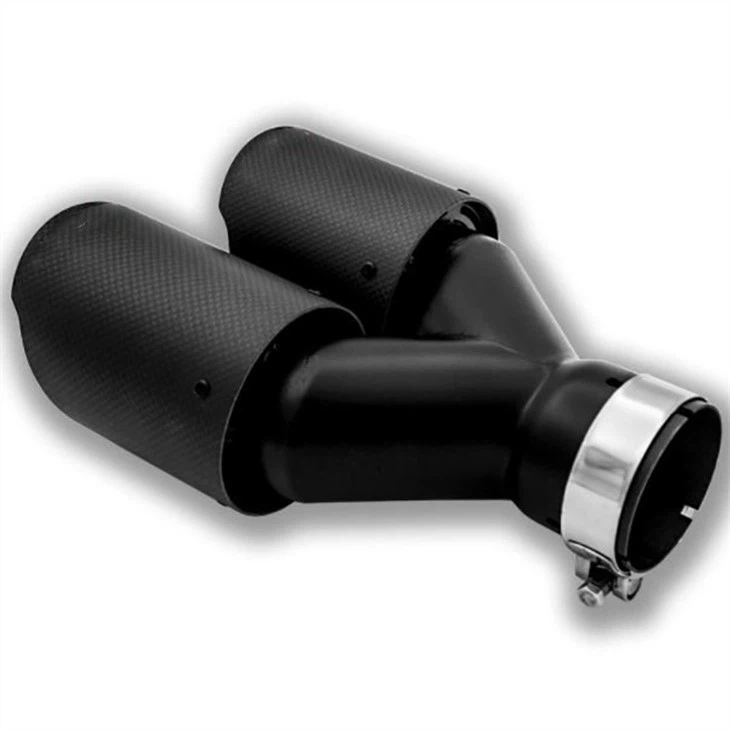

In high - performance engines, headers are often designed with larger - diameter tubes and smooth bends to minimize resistance and maximize exhaust flow rate. Our For Porsche Macan 95b Water Tank Hose Exhaust Pipe is designed with precision to ensure optimal exhaust flow for Porsche Macan engines.
Impact on Engine Performance and Efficiency
The influence of exhaust pipe design on exhaust flow rate has a direct impact on engine performance and efficiency. As mentioned earlier, a higher exhaust flow rate can reduce back - pressure on the engine. This allows the engine to breathe more freely, which can lead to increased power output and torque.
Improved exhaust flow can also enhance fuel efficiency. When the engine can expel exhaust gases more quickly, it can take in fresh air - fuel mixture more efficiently. This means that the engine can burn the fuel more completely, resulting in better fuel economy.
In addition, a well - designed exhaust system can contribute to a more environmentally friendly vehicle. By reducing back - pressure and improving engine efficiency, the engine can produce fewer harmful emissions. This is particularly important in today's automotive industry, where there is a growing emphasis on reducing the environmental impact of vehicles.
Conclusion
In conclusion, the design of pipes exhaust systems has a profound influence on the exhaust flow rate. Factors such as pipe diameter, length, bends, muffler design, and header design all play crucial roles in determining how efficiently exhaust gases can flow through the system. As a pipes exhaust supplier, we understand the importance of these design elements and strive to provide high - quality exhaust products that are optimized for different engine types and applications.
If you are looking for exhaust pipes that can improve your engine's performance and efficiency, we invite you to contact us for procurement and further discussions. Our team of experts is ready to assist you in selecting the right exhaust system for your specific needs.
References
- Crolla, D. A. (2001). The Automotive Chassis: Engineering Principles. Society of Automotive Engineers.
- Heywood, J. B. (1988). Internal Combustion Engine Fundamentals. McGraw - Hill.
- White, F. M. (2011). Fluid Mechanics. McGraw - Hill.