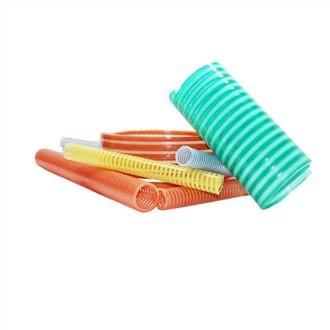
Do PVC garden hoses kink easily? This is a question that many gardeners and homeowners often ask when considering the purchase of a garden hose. As a supplier of PVC garden hoses, I have encountered this query numerous times, and I believe it's essential to provide a comprehensive answer based on scientific facts and practical experiences.
Understanding PVC Garden Hoses
PVC, or polyvinyl chloride, is a widely used plastic material in the manufacturing of garden hoses. It is popular due to its relatively low cost, durability, and resistance to many environmental factors. PVC garden hoses come in various lengths, diameters, and qualities, making them suitable for a wide range of applications, from watering small flower beds to large lawns.
Factors Affecting Kinking
Several factors can influence whether a PVC garden hose kinks easily. Let's take a closer look at these factors:
1. Hose Thickness and Quality
Thicker PVC hoses tend to be more resistant to kinking. High - quality PVC hoses are often made with a more robust formulation and may have additional layers or reinforcements. These hoses are less likely to bend sharply and form kinks. For example, a well - made Flexible Plastic Pipe Garden Hose Pvc with a thicker wall can maintain its shape better under pressure and movement.
2. Hose Diameter
The diameter of the hose also plays a role. A wider diameter hose generally has more internal volume and is less likely to kink compared to a narrow one. A larger diameter allows for a smoother flow of water, reducing the chances of the hose collapsing or bending in a way that causes a kink. However, wider hoses may be heavier and more cumbersome to handle.
3. Temperature
Temperature can significantly affect the flexibility of PVC hoses. In cold weather, PVC becomes more rigid, making it more prone to kinking. When the temperature drops, the plastic loses its elasticity, and even a slight bend can result in a kink. On the other hand, in warm weather, PVC hoses are more flexible and less likely to kink.
4. Handling and Storage
How the hose is handled and stored can also lead to kinking. If the hose is pulled or twisted roughly during use, it can easily form kinks. Similarly, improper storage, such as coiling the hose too tightly or leaving it in a tangled mess, can cause permanent kinks. For instance, if you store a 10 ft Garden Hose in a tight coil for an extended period, it may develop kinks that are difficult to remove.
Scientific Explanation of Kinking
From a scientific perspective, kinking occurs when the internal structure of the PVC hose is disrupted. When a hose is bent at a sharp angle, the inner wall of the bend can collapse, restricting the flow of water. This collapse is due to the pressure exerted on the hose walls. The PVC material, which is relatively rigid compared to some other flexible materials, may not be able to withstand the stress without deforming.
The molecular structure of PVC also plays a role. PVC is a thermoplastic polymer, and its properties can change depending on external factors such as temperature and pressure. In cold temperatures, the polymer chains in PVC become more tightly packed, reducing the material's flexibility. This lack of flexibility makes it easier for the hose to kink when bent.
Tips to Prevent Kinking
As a PVC garden hose supplier, I often provide my customers with tips on how to prevent kinking:
1. Choose the Right Hose
Select a high - quality PVC hose with a suitable thickness and diameter for your needs. Consider the climate in your area and choose a hose that is designed to perform well in those conditions. For example, if you live in a cold climate, look for a hose with better cold - weather flexibility.
2. Proper Handling
When using the hose, avoid pulling or twisting it sharply. Instead, gently guide the hose along its path. If you need to change the direction of the hose, do it gradually to prevent sudden bends.
3. Correct Storage
Store the hose properly when not in use. You can use a hose reel to keep the hose neatly coiled. Make sure the hose is dry before storage to prevent mold and mildew growth, which can also weaken the hose over time.
4. Use Hose Guides
Hose guides can be a useful accessory to prevent kinking. These guides can be attached to fences, walls, or other structures to keep the hose in a straight or gentle curve, reducing the chances of kinking.
Our Product Range
At our company, we offer a wide range of PVC garden hoses that are designed to minimize kinking. Our Garden Spreyar Pvc Hose is made from high - quality PVC material with a unique formulation that provides excellent flexibility and resistance to kinking. It is suitable for various watering tasks, such as spraying plants and cleaning outdoor areas.
Our 10 ft Garden Hose is a convenient option for small - scale gardening. It is lightweight and easy to handle, yet still offers good resistance to kinking. We also have larger diameter hoses for more extensive watering needs, which are designed to maintain a smooth water flow and resist kinking.
Conclusion
In conclusion, whether PVC garden hoses kink easily depends on several factors, including hose thickness, diameter, temperature, and handling. While PVC hoses can be prone to kinking under certain conditions, choosing the right hose, handling it properly, and storing it correctly can significantly reduce the likelihood of kinking.
If you are in the market for a high - quality PVC garden hose that offers excellent performance and resistance to kinking, we invite you to explore our product range. We are committed to providing our customers with the best PVC garden hoses at competitive prices. Contact us to discuss your specific requirements and start a purchase negotiation.


References
- ASTM International. (20XX). Standard Specification for Polyvinyl Chloride (PVC) Plastic Pipe, Schedules 40 and 80.
- National Gardening Association. (20XX). Gardening Tips: Choosing and Using Garden Hoses.
- Plastic Pipe and Fittings Association. (20XX). Properties and Performance of PVC Pipes.