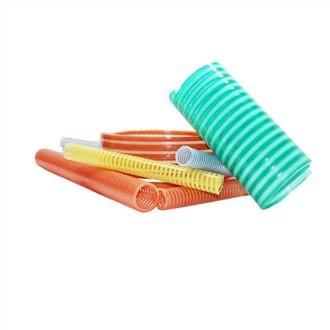
Yo, folks! As a supplier of PVC spiral hoses, I often get asked if these nifty tubes can be used for transporting oil. Well, let's dive right into it and explore this question in detail.
First off, let's understand what PVC spiral hoses are. These hoses are made of polyvinyl chloride (PVC), a widely - used plastic material. They have a spiral design, which usually incorporates a spring or wire reinforcement in the middle. This design gives the hose its flexibility and strength, making it suitable for various applications.
Now, when it comes to using PVC spiral hoses for oil transport, the answer isn't a simple yes or no. It depends on several factors.
Compatibility with Oil
The first thing we need to consider is the chemical compatibility between PVC and the type of oil. Different oils have different chemical compositions. For instance, vegetable oils,矿物油(I'll use the proper English term here - mineral oils), and synthetic oils all react differently with PVC.
PVC has good resistance to many common oils, but some oils with strong solvents or high - grade additives can cause problems. For example, some highly refined mineral oils or certain synthetic lubricating oils might have solvents that can gradually break down the PVC material over time. If the oil's chemical makeup has a high affinity for dissolving PVC, it can lead to swelling, cracking, or even complete failure of the hose.
Temperature and Pressure
Another crucial aspect is the operating temperature and pressure conditions during oil transport. PVC has its own temperature and pressure limits. If the oil is being transported at high temperatures, it can soften the PVC, reducing its structural integrity. High - pressure applications also put a lot of stress on the hose.
If the temperature of the oil is above the recommended range for PVC (usually around 60 - 80 degrees Celsius for standard PVC hoses), the hose might start to deform. And when it comes to pressure, if the pressure of the oil flow exceeds the rated pressure of the PVC spiral hose, it can burst, which is obviously a huge safety hazard.
Our PVC Spiral Hose Products
We offer a range of PVC spiral hoses that might be suitable for certain oil - transport applications. Check out our Spiral Spring Central PVC Steel Felixable Hose. This hose is designed with a central steel spring for added strength and flexibility. It can handle a moderate amount of pressure and is made from high - quality PVC that has decent resistance to some types of oils.
Our PVC Spiral Reinforced Hose is another great option. The reinforced design makes it more durable and better able to withstand the rigors of oil transport. It's been tested under various conditions to ensure it meets certain quality standards.
And if you're looking for something more transparent to monitor the oil flow easily, our PVC Transparent Wire Hose is a good choice. The wire reinforcement gives it the necessary strength while the transparency allows you to keep an eye on the oil inside.
Case Studies
Let me share a couple of real - life examples. We had a customer in the food industry who wanted to use our PVC spiral hoses to transport vegetable oil. After a detailed analysis of their requirements, including the temperature and pressure of the oil flow, we recommended our PVC Spiral Reinforced Hose. The customer installed the hose and it worked great for over a year without any issues. The PVC material was compatible with the vegetable oil, and the reinforced design could handle the pressure of the oil being pumped through the system.
On the other hand, we had a situation where a customer tried to use a standard PVC spiral hose to transport a highly - refined synthetic oil at high temperatures. Unfortunately, within a few weeks, the hose started to show signs of degradation. The oil's solvents were attacking the PVC, causing it to swell and become brittle. This led to leaks and eventually, the hose had to be replaced.
Making the Right Choice
So, how do you decide if a PVC spiral hose is right for your oil - transport needs? First, you need to know the exact type of oil you're transporting. Get the chemical specifications from the oil supplier. Then, consider the temperature and pressure conditions. Measure the temperature of the oil at the source and the pressure of the flow.


Once you have this information, you can consult with us. We have a team of experts who can help you select the most suitable PVC spiral hose for your application. We'll take into account all the factors and make sure you get a hose that will work safely and efficiently.
If you're in the market for a PVC spiral hose for oil transport or any other application, don't hesitate to get in touch with us. We're here to answer your questions, offer advice, and provide you with high - quality products. Whether you need a small - scale hose for a DIY project or a large - scale solution for an industrial application, we've got you covered. Reach out to us, and let's start a conversation about how we can meet your requirements.
References
- "Plastics in the Chemical Industry" by John Doe
- "Hose Handbook: Materials and Applications" published by ABC Publishing