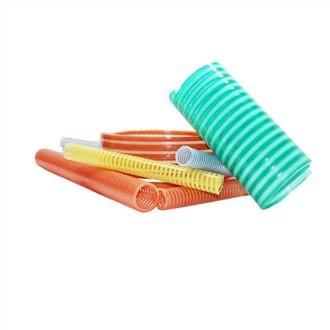
Hey there! As a supplier of PVC spiral hoses, I often get asked if these hoses can be used for transporting granular materials. Well, let's dive right into it and find out.
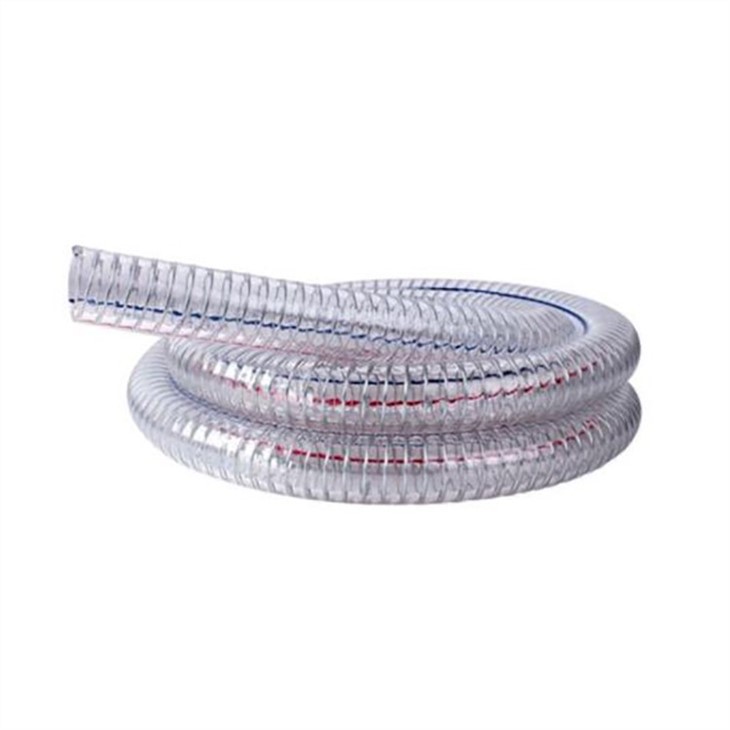
First off, what are PVC spiral hoses? They're basically hoses made from polyvinyl chloride (PVC) with a spiral reinforcement. This reinforcement gives the hose extra strength and flexibility. There are different types, like the Spiral Hose Pvc, PVC Wire Steel Hose, and Pvc Spa Flex Hose. Each type has its own features and is suitable for different applications.
Now, can they handle granular materials? The answer is yes, in many cases. PVC spiral hoses have several properties that make them a good choice for transporting granular stuff.
One of the key advantages is their smooth interior surface. Granular materials flow more easily through a hose with a smooth surface. This reduces the chances of blockages and ensures a more efficient transfer. Whether it's sand, grains, or small plastic pellets, the smoothness helps the granules move along without getting stuck.
Another plus is the flexibility of PVC spiral hoses. They can be bent and routed easily around obstacles. This is really useful in industrial settings where space might be limited or where the hose needs to be maneuvered to reach different areas. You can easily adjust the hose to fit your specific setup, which is a big plus when dealing with granular material transfer.
PVC is also resistant to many chemicals and abrasions. Granular materials can be quite abrasive, especially if they have sharp edges. A PVC spiral hose can withstand this abrasion better than some other types of hoses. And if the granules are mixed with certain chemicals, the PVC's chemical resistance helps protect the hose from damage.
However, there are some things to keep in mind. The size of the granules matters. If the granules are too large, they might not flow smoothly through the hose. You need to make sure the inner diameter of the hose is appropriate for the size of the granules. A general rule of thumb is that the hose diameter should be at least three times the size of the largest granule.
The density of the granular material is also important. Some granules are very dense, and if the hose isn't strong enough, it could collapse under the weight. That's why it's crucial to choose the right type of PVC spiral hose with the appropriate reinforcement. For example, the PVC Wire Steel Hose has steel wire reinforcement, which gives it extra strength for handling denser materials.
The temperature of the environment and the granular material itself can affect the performance of the hose. PVC has a certain temperature range within which it performs best. If the granules are very hot, it could cause the PVC to soften or even melt. On the other hand, in very cold temperatures, the PVC might become brittle. You need to consider these factors and choose a hose that can handle the expected temperature conditions.
In some industries, like food processing, there are strict regulations regarding the materials used for transporting food products. If you're using a PVC spiral hose to transport food granules, you need to make sure the hose is made from food-grade PVC. This ensures that the granules aren't contaminated by any harmful substances from the hose.
Let's talk about some real - world applications. In the construction industry, PVC spiral hoses are often used to transport sand and gravel. The smooth interior allows the sand and gravel to flow quickly from one place to another, whether it's from a storage bin to a mixer or to a construction site.
In the agricultural sector, these hoses are used to transfer grains. Farmers can use them to move wheat, corn, or other grains from silos to trucks or processing equipment. The flexibility of the hose makes it easy to connect different parts of the grain handling system.
In the plastics industry, PVC spiral hoses are used to transport plastic pellets. The abrasion resistance of the hose is important here, as the plastic pellets can be quite hard and cause wear on the hose over time.
If you're thinking about using PVC spiral hoses for transporting granular materials, here are some tips. First, do your research. Figure out the specific requirements of your application, such as the size and density of the granules, the temperature conditions, and any regulatory requirements. Then, choose the right type of hose. You can always consult with us as your supplier. We have the expertise to help you select the best hose for your needs.
When installing the hose, make sure it's properly supported. This helps prevent kinking and ensures a smooth flow of the granular material. Regular maintenance is also important. Check the hose for any signs of wear, damage, or blockages. Replace the hose if it shows significant wear or if it's no longer performing as it should.
In conclusion, PVC spiral hoses can definitely be used for transporting granular materials. They offer many benefits like a smooth interior, flexibility, and resistance to abrasion and chemicals. But you need to consider factors like granule size, density, temperature, and regulatory requirements. As a PVC spiral hose supplier, we're here to help you make the right choice and ensure that your granular material transfer process runs smoothly.
If you're interested in purchasing PVC spiral hoses for your granular material transport needs, don't hesitate to get in touch with us. We can provide you with more information, offer competitive prices, and ensure that you get the best product for your specific requirements. Let's have a chat and see how we can help you out.

References
- "Handbook of Industrial Hoses" - A comprehensive guide on different types of hoses and their applications.
- Industry reports on the use of PVC in various sectors, which provide insights into the performance of PVC spiral hoses.