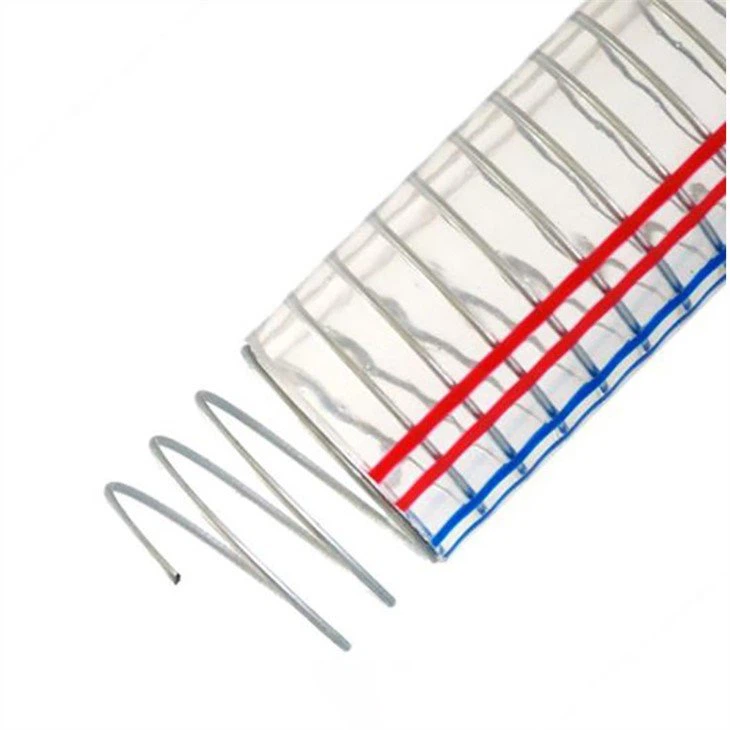
PVC spiral hoses are widely used in various industries due to their flexibility, durability, and cost - effectiveness. As a PVC Spiral Hose supplier, I often receive inquiries about the temperature resistance of these hoses. In this blog, I will delve into the factors that affect the temperature resistance of PVC spiral hoses, their typical temperature ranges, and how to select the right hose for different temperature applications.
Factors Affecting Temperature Resistance of PVC Spiral Hoses
1. PVC Resin Quality
The quality of the PVC resin used in the manufacturing of the hose plays a crucial role in determining its temperature resistance. High - quality PVC resins are formulated to withstand a wider range of temperatures. These resins are often engineered with specific additives that enhance their thermal stability. For example, some PVC resins are modified with heat - stabilizers that prevent the degradation of the polymer chains at elevated temperatures. On the other hand, low - quality PVC resins may start to lose their mechanical properties and become brittle or soft at relatively lower temperatures.
2. Plasticizers
Plasticizers are added to PVC to make it more flexible. However, different types of plasticizers have different temperature - related characteristics. Some plasticizers are more stable at high temperatures, while others may volatilize or migrate out of the PVC matrix at elevated temperatures, leading to a loss of flexibility and potentially causing the hose to harden. For instance, phthalate - based plasticizers, which were commonly used in the past, have limitations in high - temperature applications. Newer, more heat - resistant plasticizers, such as adipates and trimellitates, are now being used to improve the temperature resistance of PVC spiral hoses.
3. Reinforcement Layers
Many PVC spiral hoses have reinforcement layers, such as polyester or nylon spirals. These reinforcement layers not only enhance the pressure - bearing capacity of the hose but also have an impact on its temperature resistance. Different materials have different thermal expansion coefficients. If the reinforcement layer and the PVC matrix have significantly different expansion rates at different temperatures, it can lead to stress within the hose, potentially causing damage. For example, at high temperatures, if the reinforcement layer expands more than the PVC, it may cause the hose to bulge or even burst.
Typical Temperature Ranges of PVC Spiral Hoses
1. Low - Temperature Resistance
Most standard PVC spiral hoses can withstand low temperatures down to around - 10°C to - 20°C. At these temperatures, the hose may become stiffer, but it should still maintain its basic integrity. However, if the temperature drops below this range, the PVC may become extremely brittle, and the hose may crack easily when bent or subjected to mechanical stress. For applications in cold environments, such as in refrigeration systems or outdoor use in winter, special low - temperature - resistant PVC spiral hoses are available. These hoses are formulated with additives and plasticizers that can keep the PVC flexible at much lower temperatures, sometimes down to - 40°C.
2. High - Temperature Resistance
The high - temperature resistance of standard PVC spiral hoses is typically in the range of 60°C to 80°C. At these temperatures, the hose may start to soften slightly, but it should still be able to perform its basic function of transporting fluids or gases. However, if the temperature exceeds this range, the PVC may start to degrade, releasing harmful substances and losing its mechanical properties. For high - temperature applications, such as in hot water systems or industrial processes where high - temperature fluids are involved, high - temperature - resistant PVC spiral hoses are required. These hoses can withstand temperatures up to 90°C or even higher, depending on the specific formulation and manufacturing process.
Selecting the Right PVC Spiral Hose for Different Temperature Applications
1. Identify the Temperature Range
The first step in selecting the right PVC spiral hose is to accurately identify the temperature range of the application. This includes both the normal operating temperature and any potential peak temperatures. For example, in a hot water circulation system, the normal operating temperature may be around 60°C, but there could be short - term peak temperatures of up to 80°C during startup or system malfunctions.
2. Consider the Application Environment
In addition to the temperature, the application environment also needs to be considered. For example, if the hose is used in an environment with exposure to chemicals or UV radiation, it may affect the temperature resistance of the hose. Some chemicals can react with the PVC or the plasticizers, reducing the hose's ability to withstand high or low temperatures. UV radiation can also cause the PVC to degrade over time, especially at high temperatures.
3. Choose the Right Hose Type
Based on the temperature range and application environment, choose the appropriate type of PVC spiral hose. For low - temperature applications, look for hoses with low - temperature - resistant plasticizers and formulations. For high - temperature applications, select hoses with heat - resistant additives and reinforcement layers that can withstand the thermal stress. You can find a variety of suitable hoses on our website, such as Spiral Pipe Pvc, PVC Hose for Vacuum, and 5 Inch Water Suction Hose.

Case Studies
1. Cold Storage Application
A cold storage facility needed a PVC spiral hose for their refrigerant transfer system. The temperature in the cold storage area was around - 20°C. They initially used a standard PVC spiral hose, but they found that the hose became very stiff and cracked after a few months of use. After consulting with us, they switched to our low - temperature - resistant PVC spiral hose, which was specifically formulated for such cold environments. The new hose has been performing well, with no signs of cracking or loss of flexibility even after long - term use.
2. Hot Water System Application
A commercial building's hot water system required a PVC spiral hose for the circulation of hot water at around 70°C. The original hose they used was a standard PVC hose, and it started to soften and deform after a short period of use. We recommended our high - temperature - resistant PVC spiral hose, which can withstand temperatures up to 90°C. Since then, the hose has been able to handle the hot water circulation without any issues, providing a reliable solution for the building's hot water system.
Conclusion
Understanding the temperature resistance of PVC spiral hoses is crucial for selecting the right hose for your specific application. As a PVC Spiral Hose supplier, we offer a wide range of hoses with different temperature - resistant properties to meet the diverse needs of our customers. Whether you need a hose for low - temperature or high - temperature applications, we can provide you with the most suitable solution. If you have any questions about the temperature resistance of our PVC spiral hoses or need help in selecting the right hose for your project, please feel free to contact us for further discussion and procurement negotiation.
References
- "Handbook of PVC Technology" by William V. Titow
- "Plasticizers: Principles and Practice" by George Wypych