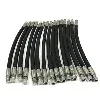
The following points should be considered when using plastic hose hoses and hose assemblies:
1. Working environment: ambient temperature; atmospheric conditions; external contact with materials.
2. Transport medium: liquid; gas; solid; a mixture of the above-mentioned media.
3. Delivery method: pressurized discharge; vacuum suction; gravity downflow; including flow velocity; flow medium is a mixture of solid and liquid, solid and gas.
4. Working conditions: pressure and temperature of conveying materials; frequency of use.
5. Assembly: the degree of bending; the vibration of the system; the risk of damage due to impact and friction; the use of the correct connection type.
6. Storage instructions:
(1) General description During storage, especially long-term storage and exposure to certain conditions (such as media and other factors), the physical properties of hoses and hose assemblies will change, causing them to be lost before use. some of the best performance. Therefore, storage conditions should provide the hose and hose assembly with optimum protection and minimum deterioration.
(2) Storage period The storage period should be as short as possible. Inventory product turnover must follow the "first in, first out" rule. In case of long-term storage, the product should be tested for performance before use.
(3) Temperature Whenever possible, the storage temperature should be between 0 and 35°C, preferably around 15°C. The temperature of the product during storage shall not exceed 50°C or -30°C and shall not fluctuate abnormally.
(4) Humidity The relative humidity shall not exceed 65%.
(5) Light The product should be stored in a dark place away from sunlight and strong artificial light sources. If the product storage area has windows or light-transmitting holes, use a red, orange-yellow or white shade.
(6) Ozone Since ozone will have a harmful effect on rubber products, the storage area should not park devices that can generate ozone. Examples include mercury vapor lamps, high-voltage electrical devices, electric motors, or other devices capable of producing sparks or discharges.
(7) Storage environment Rubber and hose shall not be placed with certain products (especially solvents, oils, greases, acids and disinfectants, etc.) or exposed to the volatile gases of these products. Do not contact with certain metals, such as copper, iron and manganese, which can have a harmful effect on certain rubber products.
(8) Heat source Hose products should be stored away from heat sources. There should be a sufficient distance between the product and the heat source to ensure compliance with the provisions of Article 4.3.
(9) Electric and magnetic fields The hose product storage area should be kept away from equipment that generates electric and magnetic fields. Heat is generated because changes or fluctuations in electric and magnetic fields can generate magnetically induced currents in the metal.
(10) Storage method Hose products should be stored and placed in a manner that will not withstand excessive stress, elongation or deformation, and should avoid contact with sharp objects or the ground. Whenever possible, use storage racks to store hose products. Coiled hoses or hose assemblies should be stored flat, preferably not stacked. If stacking is unavoidable, the height of the stack should be limited to the extent that it does not cause permanent deformation of the hoses stacked on the bottom layer. Coiled hose products must not be hung from stakes. Hose and hose assemblies supplied straight should be stored flat and not bent. Large diameter hoses used in the petroleum industry should be end mounted.
(11) Rodents Hose products should be guaranteed to be free from rodents, and if there is such a hazard, appropriate protection should be provided for the product.
(12) Out of warehouse Care should be taken to ensure that the hose products out of the warehouse are stored under the correct storage conditions and are consistent with their intended use. Therefore, it is important to identify the different types of hose products in stock. Hose assemblies with non-permanent fittings, such as those with adjustable clamp-grip construction, should be checked to ensure reliable performance of the fitting.
(13) Return to storage Empty the conveyed material before the used hose assembly is returned to storage. Pay more attention to those hoses used to transport chemicals, explosive, flammable or corrosive materials. Hoses should be inspected after cleaning and before returning to storage to determine their suitability for continued use.