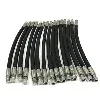
In short, the main factors for selecting the form are system pressure, pressure fluctuation, oil flow velocity, temperature, oil and environmental conditions, etc.
High-pressure hoses used in hydraulic systems are made of synthetic rubber and reinforced according to the intended load. In contact with the oil is an inner tube made of oil-resistant synthetic rubber, surrounded by several layers of reinforcement made of natural or synthetic fibers made of yarn, wire or a combination. The reinforcement layer can be woven or wound. The outside is an oil-resistant skin with adhesive between each layer.
So what are the versatility of high pressure hose products? The oil hose can pass water, dilute sulfuric acid solution,
The temperature of steam, mud, etc. does not exceed 100 degrees Celsius.
The red oil-resistant hose with inner rubber can be used for steam hoses. The temperature of the hose must not exceed 130 degrees.
Of course, sandblasting series hoses are more suitable for use in mud.
There are also many, as long as the medium plays the same role, the same pressure hose can be used in an emergency.
Note: The hose arrangement should try to avoid the heat source, away from the engine exhaust pipe. If necessary, equipment such as bushings or maintenance screens can be used to prevent the hose from deteriorating due to heat. The pipe equipment should be prevented from being in a tensioned state. Even if there is no relative movement at both ends of the pipe, the pipe should be kept loose. The tensioned pipe will expand under pressure and reduce its strength. Do not misinterpret tubing during equipment. Small changes in the pipe can reduce its strength and loosen the joints. When drilling high-pressure pipe equipment for oil drilling, the joints should be fastened to the pipes, not the pipes to the joints. If the pipe equipment is on a key component, timely inspection or replacement of the pipe should be advocated. When it is necessary to penetrate or operate, where there is conflict with the mechanical surface, maintenance equipment such as hose clamps or springs should be used to prevent damage to the outer layer of the pipe. If bending is required, the bending radius of the pipe should not be too small and should be greater than 9 times the outer diameter. It is recommended that the straight section be more than 2 times the outer diameter of the pipe. In addition, it is recommended to use maintenance equipment such as hose clamps or springs to prevent damage to the outer layer of the pipe.