Hey there, folks! I'm a supplier of steel fittings, and I've been in this industry for quite a while. One question that often pops up from my customers is, "What is the notch toughness of steel fittings?" Well, today, I'm gonna break it down for you in a way that's easy to understand.
What's Notch Toughness Anyway?
Notch toughness is a super important property when it comes to steel fittings. You see, in real - world applications, steel fittings can face all sorts of impacts and stresses. A notch is like a small cut or groove on the surface of the steel fitting. And when there's a notch, it can cause stress to concentrate in that area.
Notch toughness measures the ability of a steel fitting to absorb energy and resist cracking at a notch under impact loading. Think of it as how well the fitting can take a hit without breaking apart. If a steel fitting has high notch toughness, it means it can handle a lot of impact energy before it fails. On the other hand, low notch toughness can lead to sudden and catastrophic failure when the fitting faces an impact.
Why Does Notch Toughness Matter for Steel Fittings?
Let's talk about some practical reasons why notch toughness is crucial for steel fittings.
Safety
Safety is always the top priority, especially in industries like construction, oil and gas, and manufacturing. Steel fittings are used in pipelines, structures, and machinery. If a fitting with low notch toughness fails due to an impact, it can lead to leaks, structural collapses, or equipment malfunctions. For example, in an oil pipeline, a failed fitting could cause an oil spill, which is not only bad for the environment but also a huge safety hazard.
Durability
Steel fittings are expected to last a long time. High notch toughness helps the fittings withstand repeated impacts and stresses over their service life. This means less frequent replacements, which can save a lot of money in the long run. For instance, in a building's plumbing system, fittings with good notch toughness can resist the constant water flow and pressure changes without breaking.
Performance in Different Environments
Steel fittings are used in various environments, from cold arctic regions to hot and humid tropical areas. Temperature can have a big impact on the notch toughness of steel. In cold temperatures, steel can become more brittle, and its notch toughness can decrease. So, for fittings used in cold environments, it's essential to choose steel with high notch toughness to prevent cold cracking.
Factors Affecting Notch Toughness of Steel Fittings
There are several factors that can influence the notch toughness of steel fittings.
Chemical Composition
The chemical composition of steel plays a major role. Elements like carbon, manganese, nickel, and chromium can affect the microstructure of steel, which in turn impacts notch toughness. For example, carbon can increase the strength of steel but may also reduce its notch toughness if the content is too high. On the other hand, nickel can improve the notch toughness, especially at low temperatures.
Heat Treatment
Heat treatment is another crucial factor. Processes like annealing, quenching, and tempering can change the microstructure of steel and enhance its notch toughness. Annealing can relieve internal stresses and make the steel more ductile, which is good for notch toughness. Quenching and tempering can also improve the balance between strength and toughness.

Manufacturing Process
The way steel fittings are manufactured can also affect their notch toughness. For example, if there are defects in the casting or forging process, such as porosity or inclusions, it can reduce the notch toughness of the fitting. Good manufacturing practices, like proper quality control and precision machining, are necessary to ensure high notch toughness.
Measuring Notch Toughness
There are a few standard tests used to measure the notch toughness of steel fittings. One of the most common tests is the Charpy V - notch test. In this test, a small specimen with a V - shaped notch is struck by a pendulum. The energy absorbed by the specimen during the impact is measured, and this value is used to evaluate the notch toughness of the steel.
Another test is the Izod test, which is similar to the Charpy test but uses a different specimen configuration. These tests provide valuable information about how well the steel fitting can resist cracking under impact.
Our Steel Fittings and Notch Toughness
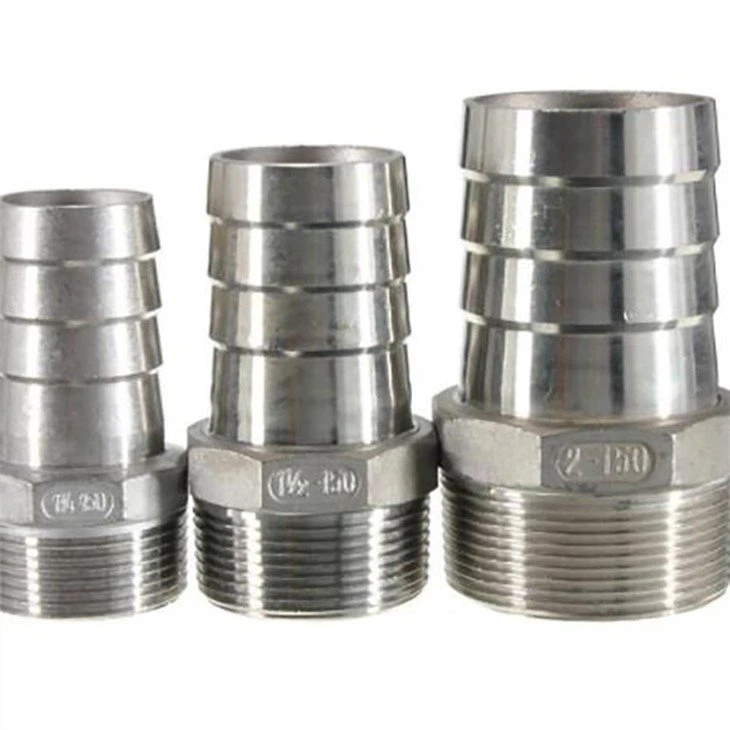
As a steel fitting supplier, I understand the importance of notch toughness. That's why we take great care in selecting the right steel materials and using proper manufacturing processes. Our Stainless Steel Pipe Fitting Connector, Elbow Fitting, and Steel Pipe Coupling Fitting are all made from high - quality steel with excellent notch toughness.
We also perform regular quality control checks using the Charpy and Izod tests to ensure that our fittings meet the highest standards. Whether you need fittings for a small plumbing project or a large industrial pipeline, you can trust that our products will be able to handle the impacts and stresses they'll face.
Wrapping Up and Looking Forward to Doing Business
So, there you have it, a crash course on the notch toughness of steel fittings. It's a complex but essential property that can make a big difference in the safety, durability, and performance of your projects.
If you're in the market for steel fittings and want products with top - notch notch toughness, don't hesitate to contact us for procurement and further discussions. We're always here to help you find the right fittings for your needs.
References
- ASM Handbook Volume 1: Properties and Selection: Irons, Steels, and High - Performance Alloys
- ASTM Standards for Metallic Materials
- "Metallurgy for the Non - Metallurgist" by J. D. Verhoeven