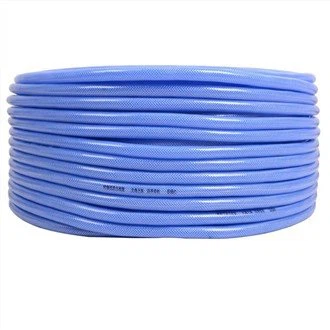
Vibration is an inevitable factor in many industrial environments, and its influence on industrial hoses is complex and far - reaching. As an industrial hose supplier, I have witnessed firsthand the various impacts that vibration can have on these essential components in industrial settings.
1. Structural Integrity of Industrial Hoses
Vibration can significantly affect the structural integrity of industrial hoses. Over time, continuous vibrations can cause the hose material to fatigue. Most industrial hoses are made of materials such as rubber, thermoplastics, or metal, each with its own set of mechanical properties.
Rubber hoses, for example, are known for their flexibility. However, when exposed to vibration, the repeated stretching and compression can lead to the formation of micro - cracks in the rubber matrix. These micro - cracks can gradually grow, weakening the overall structure of the hose. Eventually, this can result in leaks or even complete hose failure. For instance, in a manufacturing plant where machinery generates high - frequency vibrations, rubber hoses used for coolant transfer may start to show signs of wear and tear much earlier than expected due to vibration - induced fatigue.
Thermoplastic hoses, on the other hand, may experience a different kind of damage. Vibration can cause the thermoplastic material to soften and deform over time. The constant movement can disrupt the molecular structure of the plastic, reducing its strength and dimensional stability. This deformation can lead to issues such as kinking or blockage within the hose, which can impede the flow of fluids or gases.
Metal hoses are more rigid compared to rubber and thermoplastic hoses, but they are not immune to the effects of vibration. In high - vibration environments, the joints of metal hoses can loosen. The constant shaking can cause the fasteners to work loose, leading to leaks at the connection points. Additionally, the metal itself can experience stress corrosion cracking under the influence of vibration, especially in the presence of corrosive substances in the fluid being transported.
2. Impact on Hose Performance
The performance of industrial hoses can be severely hampered by vibration. One of the most apparent effects is on the flow rate. As mentioned earlier, vibration - induced deformation such as kinking or blockage can restrict the passage of fluids or gases through the hose. This reduction in flow rate can have a significant impact on industrial processes. For example, in a chemical processing plant, a reduced flow rate in a Tig Welding Hose can affect the quality of the welding process, leading to defective products.
Vibration can also cause pulsations in the fluid or gas flow within the hose. These pulsations can create pressure surges, which may exceed the designed pressure limits of the hose. This can result in additional stress on the hose walls and joints, increasing the risk of failure. In extreme cases, the pressure surges can cause the hose to burst, leading to safety hazards and costly downtime for the industrial facility.
Another aspect of performance affected by vibration is the abrasion resistance of the hose. In a vibrating environment, the hose may rub against other objects, such as machinery parts or support structures. This continuous abrasion can wear down the outer layer of the hose, reducing its protective capabilities. For example, in a mining operation, where hoses are often exposed to harsh conditions and vibrations, the outer layer of a Gas Connector Hose may get abraded, increasing the risk of gas leakage.
3. Maintenance and Lifespan
Vibration has a direct impact on the maintenance requirements and lifespan of industrial hoses. Hoses exposed to high - vibration environments need to be inspected more frequently. The regular inspections help in detecting early signs of damage such as cracks, wear, or loose connections. However, frequent inspections add to the maintenance costs and time requirements for the industrial facility.
The lifespan of industrial hoses is also significantly reduced in vibration - prone environments. Instead of lasting for their intended service life, hoses may need to be replaced prematurely due to vibration - induced damage. This not only incurs additional costs for purchasing new hoses but also leads to production disruptions during the replacement process. For example, a Propane Lpg Gas Hose that is supposed to last for several years in a normal environment may need to be replaced within a few months in a high - vibration setting.
4. Mitigating the Impact of Vibration
As an industrial hose supplier, I understand the importance of providing solutions to mitigate the impact of vibration on hoses. One approach is to select the right type of hose for the specific application. For high - vibration environments, hoses with enhanced vibration resistance can be chosen. For example, some hoses are designed with special reinforcement layers that can better withstand the forces generated by vibration.
Proper installation is also crucial. Hoses should be installed with sufficient support to minimize the effects of vibration. Using vibration - isolating mounts or brackets can help reduce the transmission of vibrations from the machinery to the hoses. Additionally, ensuring that the hoses are not over - stretched or bent during installation can prevent unnecessary stress on the hose material.
Regular maintenance and monitoring are essential. As mentioned earlier, frequent inspections can detect early signs of damage. Implementing a preventive maintenance program can help in replacing hoses before they fail completely, reducing the risk of safety incidents and production downtime.
5. Conclusion and Call to Action
In conclusion, vibration can have a profound impact on industrial hoses, affecting their structural integrity, performance, maintenance requirements, and lifespan. As an industrial hose supplier, we are committed to providing high - quality hoses that can withstand the challenges posed by vibration. Our team of experts can help you select the most suitable hoses for your specific industrial applications and provide guidance on proper installation and maintenance.


If you are facing issues with vibration - related hose damage in your industrial facility or are looking for reliable industrial hoses, we invite you to contact us for a detailed discussion. We can work together to find the best solutions for your needs and ensure the smooth operation of your industrial processes.
References
- Smith, J. (2018). Industrial Hoses: Design, Materials, and Applications. Elsevier.
- Brown, A. (2019). Vibration Analysis in Industrial Settings. Springer.
- Johnson, R. (2020). Maintenance Strategies for Industrial Components. Wiley.