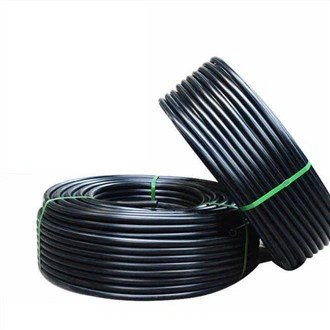
What is the flow rate of PVC spiral hoses?
As a supplier of PVC spiral hoses, I am often asked about the flow rate of our products. In this blog, I will delve into the concept of flow rate, the factors affecting the flow rate of PVC spiral hoses, and how to calculate it.
Flow rate is the volume of fluid that passes through a specific cross - sectional area of a hose per unit of time. It is usually measured in liters per minute (L/min), cubic meters per hour (m³/h), or gallons per minute (GPM). Understanding the flow rate is crucial for various applications, such as water supply, irrigation, industrial fluid transfer, and more.
There are several factors that influence the flow rate of PVC spiral hoses:
-
Hose diameter:
The diameter of the PVC spiral hose is one of the most significant factors. A larger diameter allows for more fluid to pass through the hose in a given time. According to the principles of fluid dynamics, the flow rate is proportional to the square of the radius of the hose. For example, if you double the radius of the hose, the cross - sectional area increases by a factor of four, and the potential flow rate also increases significantly. Our PVC Steel Wire Spiral Reinforced Hose comes in different diameters to meet various flow rate requirements.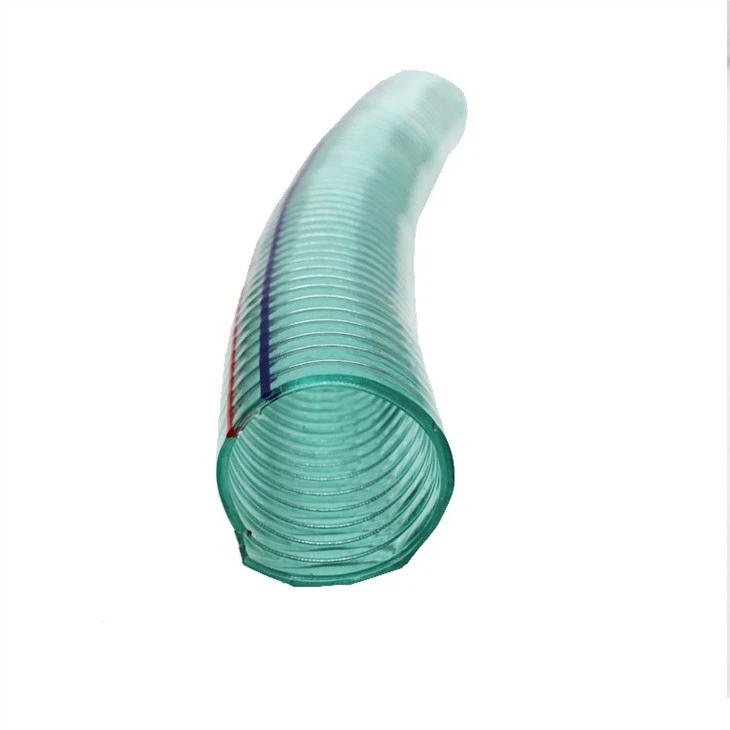

-
Pressure:
The pressure difference between the two ends of the hose is another key factor. Fluids flow from an area of high pressure to an area of low pressure. A greater pressure difference will result in a higher flow rate. However, it is important to note that the PVC spiral hose has a maximum pressure rating that it can withstand. Exceeding this rating can lead to hose failure, such as bursting or leaking. Our hoses are designed to handle different pressure levels, and we can provide hoses suitable for high - pressure applications, like our PVC Hose High Vacuum. -
Fluid viscosity:
Viscosity refers to the resistance of a fluid to flow. Fluids with high viscosity, such as thick oils or syrups, flow more slowly than fluids with low viscosity, like water. When dealing with high - viscosity fluids, the flow rate in a PVC spiral hose will be lower compared to when using low - viscosity fluids, even under the same pressure and hose diameter conditions. -
Hose length and roughness:
The length of the hose also affects the flow rate. As the length of the hose increases, the resistance to fluid flow increases, which reduces the flow rate. Additionally, the internal roughness of the hose can impede fluid flow. Our PVC spiral hoses are manufactured to have a smooth internal surface, minimizing the frictional resistance and maximizing the flow rate.
To calculate the flow rate of a PVC spiral hose, we can use the following formula based on the Bernoulli's principle and the Darcy - Weisbach equation for laminar and turbulent flows. However, in most practical applications, empirical methods and reference tables are often used.
For short - term and rough estimations, for a cylindrical hose with a constant cross - section, we can use the equation (Q = A\times v), where (Q) is the flow rate, (A) is the cross - sectional area of the hose ((A=\pi\times(d/2)^2), (d) is the inner diameter of the hose), and (v) is the average velocity of the fluid in the hose.
The actual velocity of the fluid is affected by the factors mentioned above. In many industries, such as the agricultural and industrial sectors, there are standard reference databases that can provide approximate flow rates for different hose diameters, pressures, and fluid types.
For instance, in a water supply system, if you are using a Suction Hose For Water Pump with a 2 - inch diameter under normal water pressure (around 2 - 3 bar), the flow rate can range from 50 to 100 L/min, depending on the length of the hose and other factors.
At our company, we offer a wide range of PVC spiral hoses with different specifications to meet diverse flow rate requirements. Our technical team can help you select the most suitable hose for your specific application. We can also provide guidance on how to optimize the flow rate by adjusting factors such as pressure and hose diameter.
If you are in need of PVC spiral hoses and want to discuss your flow rate requirements and other technical details, we invite you to contact us for further procurement negotiations. We are committed to providing high - quality products and excellent customer service to ensure your operations run smoothly.
References:
- Fluid Mechanics textbooks, which cover the principles of flow in pipes and hoses.
- Industry standards and guidelines for PVC hoses.
- Manufacturer's technical documentation for PVC spiral hoses.