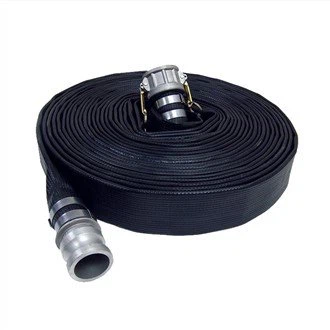
Hey there! As a hydraulic hose supplier, I'm super stoked to share with you all about what a hydraulic hose is. You might be thinking, "What's the big deal about a hose?" Well, let me tell you, hydraulic hoses are pretty crucial in a whole bunch of industries.
So, what exactly is a hydraulic hose? In simple terms, it's a flexible tube used to carry hydraulic fluid between different parts of a hydraulic system. These systems are all around us, from heavy - duty construction equipment to your everyday cars. They use pressurized fluid to transfer power, and the hydraulic hose is like the blood vessel of this system, making sure the fluid gets where it needs to go.
Hydraulic hoses are made up of several layers. The inner tube is the part that comes into direct contact with the hydraulic fluid. It has to be resistant to the fluid's chemical properties. Then there's the reinforcement layer. This is what gives the hose its strength. It can be made of different materials like braided wire or spiral - wound wire. The more layers of reinforcement, the higher the pressure the hose can handle. Finally, there's the outer cover. This protects the inner layers from things like abrasion, weather, and chemicals.
Now, let's talk about the different types of hydraulic hoses out there. One popular type is the Craftsman Pressure Washer Hose. Pressure washers are used for all sorts of cleaning jobs, from washing your car to cleaning your driveway. The hose needs to be able to handle high - pressure water flow. It's designed to be flexible so you can move the pressure washer around easily, but also strong enough to withstand the force of the water.


Another type is the High Pressure Air Hose. These are used in pneumatic systems, which use compressed air to power tools and machinery. High - pressure air hoses need to be able to handle the pressure of the compressed air without bursting. They're often used in industrial settings, like factories where there are a lot of air - powered tools.
The Braided Mineral Antistatic Rubber Hose is also an interesting one. It's made of rubber and has a braided structure for added strength. The antistatic feature is really important, especially in environments where there's a risk of static electricity causing a fire or explosion. For example, in the mining industry, where there are often flammable gases and dust particles, this type of hose helps prevent any static - related accidents.
When it comes to choosing the right hydraulic hose for your needs, there are a few things you need to consider. First, you need to know the pressure requirements. If you're using the hose in a high - pressure system, you'll need a hose with a high - pressure rating. You also need to think about the type of fluid that will be flowing through the hose. Different fluids have different chemical properties, and the hose needs to be compatible with them.
The size of the hose is another important factor. The inner diameter of the hose affects the flow rate of the fluid. A larger diameter hose will allow more fluid to flow through, but it might also be heavier and more expensive. You also need to consider the length of the hose. A longer hose might be needed in some situations, but it can also cause more pressure drop.
As a hydraulic hose supplier, I've seen all sorts of applications for these hoses. In the construction industry, hydraulic hoses are used in excavators, bulldozers, and cranes. They help these machines lift heavy loads and perform all sorts of complex movements. In the agricultural sector, tractors and other farm equipment rely on hydraulic hoses to operate things like hydraulic cylinders for lifting and lowering attachments.
In the automotive industry, hydraulic hoses are used in the braking system. The brake fluid is carried through these hoses to apply pressure to the brakes, allowing you to stop your car safely. And in the manufacturing industry, hydraulic hoses are used in all sorts of machinery, from presses to injection molding machines.
Maintenance of hydraulic hoses is also super important. You need to regularly check the hoses for any signs of wear and tear, like cracks, leaks, or bulges. If you notice any of these issues, it's best to replace the hose right away. A damaged hose can not only cause the hydraulic system to malfunction but can also be a safety hazard.
Proper installation is also key. The hose needs to be installed correctly to prevent kinking, which can restrict the flow of fluid and cause damage to the hose. You should also make sure that the fittings are tightened properly to prevent leaks.
So, if you're in the market for hydraulic hoses, whether it's for a small DIY project or a large - scale industrial application, I'm here to help. As a supplier, I can offer you a wide range of high - quality hydraulic hoses to meet your specific needs. We've got all the types I mentioned earlier, and more.
If you have any questions about which hose is right for you, or if you want to place an order, don't hesitate to reach out. We're always happy to have a chat and help you find the perfect solution for your hydraulic system. Whether you're a professional in the industry or a hobbyist looking for the right hose for your project, we've got you covered.
Let's work together to make sure your hydraulic systems run smoothly and efficiently. Contact us today to start the conversation about your hydraulic hose needs, and let's get your project on the right track!
References
- "Hydraulic Hose Handbook" by Hose Manufacturers' Association
- "Industrial Hydraulics Manual" by Eaton Corporation