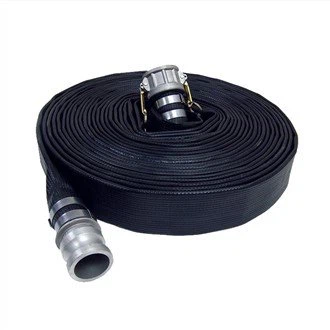
Hey there! As an industrial hose supplier, I've been getting a lot of questions lately about the fuel - resistance properties of industrial hoses. So, I thought I'd sit down and write this blog to share some insights on this topic.
First off, let's talk about why fuel resistance is such a big deal. Industrial hoses are used in all sorts of applications where they come into contact with different types of fuels. Whether it's gasoline, diesel, ethanol blends, or other petroleum - based products, these fuels can be pretty harsh on hoses. If a hose isn't fuel - resistant, it can start to break down over time. This can lead to leaks, which are not only a waste of fuel but can also be a serious safety hazard.
There are several factors that determine a hose's fuel - resistance properties. One of the most important is the material the hose is made from. Different materials have different levels of resistance to fuels.
Materials and Their Fuel Resistance
Rubber
Rubber is a common material for industrial hoses, and there are different types of rubber with varying fuel - resistance capabilities.
- Nitrile Rubber (NBR): This is one of the most popular choices for fuel - handling hoses. Nitrile rubber has excellent resistance to oils, fuels, and other petroleum - based products. It can withstand a wide range of temperatures and is relatively durable. For example, our Rubber Acetylene Hose is made with high - quality nitrile rubber in some parts, which gives it good fuel - resistance when used in appropriate applications. It's also resistant to abrasion, which is important when the hose is moving around or being handled in industrial settings.
- Fluoroelastomers (FKM): These are even more resistant to fuels than nitrile rubber. Fluoroelastomers can handle a wider range of aggressive chemicals and fuels, including some of the more exotic and high - performance fuels. However, they are more expensive than nitrile rubber. So, they're usually used in applications where extreme fuel resistance is required, like in aerospace or high - end automotive industries.
Thermoplastics
Thermoplastics are another option for industrial hoses, and they also have different fuel - resistance characteristics.
- Polyamide (PA): Polyamide hoses are known for their good mechanical properties and resistance to fuels. They are lightweight and flexible, which makes them easy to install and use. They can handle a variety of fuels, but their resistance may be affected by the type of fuel and the temperature. For example, in some cases, they may not be as resistant to high - ethanol blends as other materials.
- Polyvinyl Chloride (PVC): PVC hoses are commonly used in many industrial applications. They are relatively inexpensive and have some level of fuel resistance. However, they are not as resistant as nitrile rubber or fluoroelastomers. PVC hoses are more suitable for applications where the contact with fuel is limited or where the fuel is less aggressive.
Testing Fuel Resistance
To ensure that our industrial hoses meet the required fuel - resistance standards, we conduct a series of tests. One of the most common tests is the immersion test. In this test, a sample of the hose material is immersed in a specific fuel for a certain period of time. We then measure the changes in the material's properties, such as its weight, volume, hardness, and tensile strength.
If the material shows significant changes, it may not be suitable for use with that particular fuel. For example, if a hose gains a lot of weight after being immersed in fuel, it could mean that the fuel is being absorbed by the material, which can lead to swelling and eventual failure of the hose.
Another test we use is the permeation test. This test measures how much fuel can pass through the hose wall over a given period of time. A low permeation rate is desirable, as it means that less fuel is escaping through the hose, which is better for both safety and efficiency.
Applications and Fuel - Resistant Hoses
Different industrial applications require different levels of fuel resistance.
Automotive Industry
In the automotive industry, hoses are used for fuel delivery, coolant circulation, and other functions. Fuel - delivery hoses need to be highly resistant to gasoline, diesel, and ethanol blends. For example, modern cars often use ethanol - blended fuels, which can be more corrosive than pure gasoline. Our 8mm Lpg Hose is designed to handle LPG (liquefied petroleum gas) with good fuel - resistance properties, making it suitable for automotive applications where LPG is used.


Oil and Gas Industry
In the oil and gas industry, hoses are used for transporting crude oil, refined products, and natural gas. These hoses need to be extremely resistant to a wide range of hydrocarbons and other chemicals. Hoses used in offshore drilling operations, for example, are exposed to harsh environmental conditions and aggressive fluids. They need to be made from materials that can withstand high pressures, high temperatures, and the corrosive effects of the fuels and chemicals they carry.
Manufacturing and Industrial Plants
In manufacturing and industrial plants, hoses are used for various purposes, such as lubrication, hydraulic systems, and fuel transfer. Our Smooth And Cloth Covered Rubber Tubing can be used in some industrial applications where there is a need for a flexible and fuel - resistant hose. It can handle light - duty fuel transfer and other similar tasks.
Choosing the Right Fuel - Resistant Hose
When choosing an industrial hose for a specific application, there are several things to consider.
- Type of Fuel: First and foremost, you need to know what type of fuel the hose will be in contact with. Different fuels have different chemical compositions, and you need a hose that can resist the specific chemicals in that fuel.
- Operating Conditions: Consider the temperature, pressure, and flow rate of the fuel. High - temperature and high - pressure applications require hoses that can withstand these conditions without losing their fuel - resistance properties.
- Safety Requirements: Safety is always a top priority. Make sure the hose meets all the relevant safety standards and regulations for your industry.
If you're still not sure which hose is right for your application, don't hesitate to reach out to us. We have a team of experts who can help you choose the best fuel - resistant hose for your needs.
Conclusion
Fuel - resistance is a crucial property for industrial hoses, especially in applications where they come into contact with fuels. By understanding the different materials and their fuel - resistance capabilities, conducting proper testing, and choosing the right hose for the application, you can ensure the safety and efficiency of your operations.
If you're in the market for industrial hoses with excellent fuel - resistance properties, we'd love to hear from you. We offer a wide range of high - quality hoses that are designed to meet the needs of various industries. Contact us today to start a conversation about your hose requirements, and let's work together to find the perfect solution for you.
References
- "Handbook of Elastomers" by Bhupendra K. Gupta
- "Thermoplastics: Properties and Applications" by John Murphy