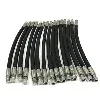
1. Proper application of rubber hose
It is very important to know the length of the rubber hose you need, and at the same time, it should also be checked whether the application standard of the rubber hose meets the requirements of the selected rubber hose. It should be ensured that the rubber hose you will be applying is more suitable. The pressure and adsorption force values should be clearly defined. In particular, it should be noted that the sudden change of working pressure or the working pressure value exceeding the allowable value may greatly shorten the service life of the rubber hose. Both sides of the rubber hose must not be continuously immersed in the chemicals being transported.
2. Install the rubber hose for application
If you install the rubber hose with a bend radius below the minimum required limit, the life of the rubber hose will be greatly shortened. Therefore, before installation, it is recommended to carry out information consultation on the application information content, especially the information content of the bending radius of the rubber hose.
3. Maintenance of rubber hoses
Cleaning: After understanding, it is recommended to remove the rubber hose. If necessary, it should be cleaned up. Inspection: The rubber hose must be inspected after each application to ensure that it has not been structurally damaged. Working pressure: If the rubber hose bears a relatively serious working pressure during use or the surface of the rubber hose will be in contact with the transported liquid for a long time, it is recommended to carry out hydraulic pressure testing.