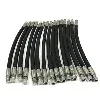
Introduction to the Use of Hose Clamps
Hose clamps, also known as hose clips, are mechanical devices used to attach and seal hoses or pipes onto fittings. They are typically made of metal, such as stainless steel or zinc-plated steel, and come in different sizes and shapes to fit various types of hoses and pipes. Hose clamps are essential tools for many industries and applications, including automotive, marine, plumbing, and industrial.
Types of Hose Clamps
There are several types of hose clamps, each with its unique design and application. The most common types are:
1. Worm Gear Clamps - Also known as hose clamps, these are the most widely used type of hose clamp. They consist of a band or strap with a screw that tightens the band around the hose or pipe. Worm gear clamps are easy to install and adjust, and they provide a secure and tight seal.
2. Spring Clamps - These are also known as pinch clamps or ear clamps. They consist of a metal band with two ears or tabs that are squeezed together by a special tool. Spring clamps are commonly used for automotive and marine applications where a low-profile clamp is needed.
3. T-Bolt Clamps - These are heavy-duty clamps that have a T-shaped bolt that holds the band in place. T-bolt clamps can apply more torque and pressure than worm gear clamps, making them suitable for high-pressure and high-temperature applications.
4. Wire Clamps - These are the simplest type of hose clamp and consist of a wire loop that is tightened around the hose or pipe by twisting the ends with pliers. Wire clamps are used for light-duty applications, such as securing hoses on gardening tools or household appliances.
How to Use Hose Clamps
To use a hose clamp, first, select the appropriate type and size of clamp for the hose or pipe you need to secure. Next, place the clamp around the hose or pipe and position it in the desired location.
For worm gear clamps, use a screwdriver or specialty clamp tool to tighten the screw, making sure the band is snug around the hose or pipe. For spring clamps, use a special tool to pinch the ears together until they are secure around the hose or pipe.
T-bolt clamps require a bit more effort to install. First, place the clamp around the hose or pipe and align the T-bolt with the slot in the band. Then, use a wrench to tighten the bolt until the band is securely tightened around the hose or pipe. Wire clamps simply require twisting the wire ends together to secure the hose or pipe.
Conclusion
In conclusion, hose clamps are essential tools for securing hoses and pipes onto fittings in various industries and applications. By selecting the appropriate type and size of clamp and following the proper installation procedure, you can ensure a secure and tight seal that will prevent leaks and other issues. Remember to inspect and replace hose clamps regularly to maintain their effectiveness and safety.
Jun 28, 2023
Leave a message
Introduction to the Use of Hose Clamps
Send Inquiry