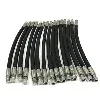
Silicone extruded hoses are a type of flexible hose used in various industries for different applications, such as medical devices, food processing, and automotive systems. This article provides an overview of the production process of silicone extruded hoses.
Raw Materials
The main raw material used for the production of silicone extruded hoses is silicon rubber. Silicon rubber is a synthetic elastomer with unique physical and chemical properties that make it ideal for applications where resistance to temperature, weather, and chemical exposure is required. Other materials used in the production process include curing agents, fillers, pigments, and release agents.
Production Process
The production of silicone extruded hoses involves several steps. These include:
Step 1: Mixing
The first step in the production process is to mix the raw materials using a high-speed mixer. The mixer blends the silicon rubber with curing agents, fillers, pigments, and release agents. The mixture is carefully controlled to ensure that the correct ratio of ingredients is maintained, which is critical to achieve the desired properties of the final product.
Step 2: Extrusion
After the mixture is thoroughly mixed, it is transferred to an extruder. An extruder is a machine that forces the mixture through a die, which shapes it into a continuous length of hose. The extruder applies heat and pressure to melt the mixture and force it through the die. The hose is then cooled using a water bath to solidify the rubber.
Step 3: Vulcanization
The vulcanization process involves heating the extruded hose to a specific temperature and holding it there for a predetermined time to cure the rubber. Curing the rubber is essential to providing the necessary strength, durability, and flexibility. The vulcanization process transforms the rubber from a sticky, moldable substance to a hardened material with the desired properties.
Step 4: Cutting and Packing
After the vulcanization process is complete, the hose is cut to the required length and packed for shipping. During this process, the hose undergoes rigorous quality control to ensure that it meets the required standards.
Quality Control
Quality control is an essential part of the production process for silicone extruded hoses. Quality control measures include:
- Raw material testing: All raw materials must undergo testing to ensure that they meet the required specifications.
- In-process testing: The production process is monitored at every stage to identify any defects or inconsistencies.
- Final inspection testing: The finished hoses undergo a battery of tests to ensure that they meet the required specifications. These tests include visual inspection, pressure testing, and temperature testing.
Conclusion
Silicone extruded hoses are a critical component in a wide range of applications. The production process involves mixing the raw materials, extruding the mixture, vulcanizing the hose, and cutting and packing it for shipping. Quality control measures are implemented at every stage of the production process to ensure that the finished product meets the required specifications.