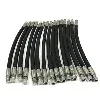
Introduction to Gas Hoses
Gas hoses are essential components of gas appliances such as cookers, heaters, and boilers. They are flexible tubes that connect the appliance to a gas supply. They come in different sizes, lengths, and materials, and are compatible with different types of gases and pressures. Proper selection, installation, and maintenance are critical for ensuring safe and efficient use of gas hoses. In this article, we will introduce the major types of gas hoses and provide some tips for their use.
Types of Gas Hoses
There are two main types of gas hoses: rubber and stainless steel. Rubber hoses are made of synthetic rubber, reinforced with braided textile or wire, and covered with a protective layer. They are lightweight, flexible, and easy to handle. They are suitable for low-pressure applications and can withstand temperatures up to 70°C. However, they are not as durable as stainless steel hoses and need to be replaced every few years.
Stainless steel hoses are made of corrugated stainless steel, with brass or stainless steel end fittings. They are more robust than rubber hoses and can handle higher pressures and temperatures, up to 200°C. They are also more resistant to kinks, twists, and abrasion, and last longer, up to ten years or more. They are recommended for high-pressure applications, such as commercial kitchens and industrial plants, where safety and reliability are crucial.
Tips for Using Gas Hoses
When selecting or replacing a gas hose, make sure it is the right size, length, and material for your appliance and gas supply. Consult the manufacturer's instructions or a licensed gas technician if you are not sure. Also, check the date of manufacture and the expiry date of the hose. Rubber hoses usually have a life span of five years, while stainless steel hoses can last up to ten years or more, depending on their use.
Before installing a gas hose, inspect it for any cracks, leaks, or signs of wear and tear. Use a soap water solution to test for leaks by applying it to the fittings and joints and looking for bubbles. If you detect a leak or damage, replace the hose immediately, and do not use the appliance until it is fixed. Also, ensure that the hose is properly secured to the appliance and gas outlet, using a suitable clip or clamp, and that it does not come into contact with sharp edges or hot surfaces.
When using a gas appliance, always follow the manufacturer's instructions and safety guidelines. Do not overload the appliance, and do not leave it unattended when in use. Turn off the gas supply and the appliance when not in use, and do not use it in confined or poorly ventilated areas or near flammable materials. Also, keep children and pets away from the appliance and the gas hose, and do not use it for any purpose other than its intended use.
Conclusion
Gas hoses are essential components of gas appliances, and proper selection, installation, and maintenance are critical for ensuring safe and efficient use. They come in different types and sizes and are suitable for different applications. When using a gas hose, always follow the manufacturer's instructions and safety guidelines, and inspect it regularly for any damage or leaks. Investing in a good quality gas hose can save you money, time, and trouble in the long run and provide you with peace of mind.
Oct 07, 2023
Leave a message
Gas hoses are essential components of gas appliances such as cookers, heaters, and boilers.
Send Inquiry