Hey there! As a supplier of Quick Fitting products, I've been in the industry for quite some time now. And one question I often get asked is, "What's the difference between Quick Fitting and traditional fitting?" Well, that's exactly what I'm gonna talk about in this blog post.
Let's start with traditional fitting. Traditional fitting has been around for ages. It's the tried - and - true method that many industries have relied on for a long time. The installation process of traditional fitting usually involves a series of steps. For example, you might need to use tools like wrenches to tighten nuts and bolts. It can be a bit time - consuming, especially when you're dealing with a large number of fittings.
In a plumbing system with traditional fittings, a plumber has to measure, cut, and then thread the pipes precisely. Each joint needs to be sealed carefully using materials like Teflon tape to prevent leaks. This requires a high level of skill and experience. If the installation isn't done right, there could be issues like leaks, which can lead to water damage over time.
Another aspect of traditional fitting is its durability. Once it's properly installed, a traditional fitting can last for a long time. The materials used, such as brass or stainless steel, are known for their strength and resistance to corrosion. However, the maintenance of traditional fittings can be a hassle. If a part breaks or needs to be replaced, it often involves disassembling a significant portion of the system, which can be both time - consuming and costly.
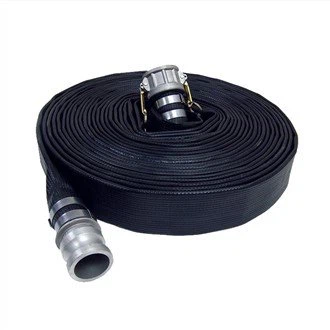
Now, let's shift our focus to Quick Fitting. Quick Fitting is a relatively new concept in the world of fittings, but it's quickly gaining popularity. The biggest advantage of Quick Fitting is, well, the speed of installation. With Quick Fitting, you don't need a whole set of tools to get the job done. In many cases, you can install a Quick Fitting by hand. For instance, the 2 Inch Layflat Hose Connector can be easily attached to a hose without the need for any special tools. This not only saves time but also reduces the need for highly skilled labor.
The design of Quick Fitting is also quite innovative. It often uses a locking mechanism that ensures a secure connection. Some Quick Fittings have a push - and - lock system, where you simply push the fitting onto the pipe or hose, and it locks into place. This makes the installation process much simpler, even for those with limited technical knowledge.
In terms of flexibility, Quick Fitting has a clear edge over traditional fitting. You can easily reconfigure a system that uses Quick Fittings. If you need to change the layout of a pipeline or add a new component, it can be done quickly and without much hassle. This is especially useful in industries where changes are frequent, such as in some manufacturing or experimental setups.
When it comes to cost, Quick Fitting can be more cost - effective in the long run. Although the initial cost of Quick Fittings might be slightly higher than traditional fittings, the savings in labor costs during installation and the ease of reconfiguration make up for it. For example, in a large - scale project, the time saved in installation can translate into significant cost savings.
However, Quick Fitting also has its limitations. One of the main concerns is its long - term durability. Since it's a relatively new technology, there are still some questions about how well it will hold up over time, especially in harsh environments. The materials used in Quick Fittings, such as certain types of plastics, might not be as resistant to extreme temperatures or chemicals as traditional materials.
Another potential drawback is the compatibility. Not all Quick Fittings are compatible with all types of pipes and hoses. You need to make sure that the Quick Fitting you choose is suitable for your specific application. Otherwise, you might run into issues like leaks or a loose connection.
Let's compare the two in some real - world scenarios. In a home plumbing project, traditional fitting might be the go - to choice for a permanent installation. For example, if you're installing a new water supply line in your house, a traditional copper pipe with threaded fittings will give you a reliable and long - lasting solution. However, if you're setting up a temporary irrigation system in your garden, a Quick Fitting like the Quickly PVC Camlock Fittings would be a better option. You can easily install and remove it as needed, without having to worry about complex installation procedures.
In an industrial setting, the choice between Quick Fitting and traditional fitting depends on the nature of the work. In a factory where production lines are frequently reconfigured, Quick Fittings are ideal. They allow for quick changes and minimize downtime. On the other hand, in a chemical processing plant where the pipes are exposed to corrosive substances, traditional stainless - steel fittings might be more appropriate due to their superior resistance.
To sum it up, both Quick Fitting and traditional fitting have their own pros and cons. The choice between the two depends on various factors such as the application, the environment, the budget, and the frequency of changes. As a Quick Fitting supplier, I firmly believe that Quick Fitting has a lot to offer, especially in terms of speed and flexibility.
If you're considering using Quick Fittings for your next project, I'd love to have a chat with you. Whether you need advice on which type of Quick Fitting is best for your application or you're ready to place an order, don't hesitate to reach out. We can discuss your requirements in detail and find the perfect solution for you.
References


- General knowledge of the fitting industry
- Personal experience as a Quick Fitting supplier