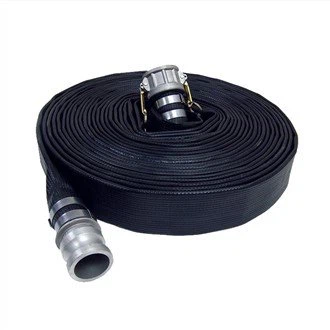
Hey there! As a supplier of Rubber Layflat products, I've gotten a ton of questions about the abrasion resistance of Rubber Layflat. So, I thought I'd take some time to break it down for you all.
First off, what exactly is abrasion resistance? Well, it's basically how well a material can withstand wear and tear from rubbing against other surfaces. In the case of Rubber Layflat, this is super important because these hoses are often used in tough environments where they're likely to come into contact with rough terrain, sharp objects, and all sorts of other things that could potentially damage them.
Rubber Layflat hoses are made from a variety of rubber compounds, each with its own unique properties. The type of rubber used can have a big impact on the hose's abrasion resistance. For example, natural rubber is known for its good elasticity and flexibility, but it may not be as resistant to abrasion as some synthetic rubbers. On the other hand, synthetic rubbers like NBR (Nitrile Butadiene Rubber) are often used in high - pressure applications and are generally more abrasion - resistant.
One of the key factors that contribute to the abrasion resistance of Rubber Layflat is the thickness of the rubber layer. A thicker rubber layer can provide more protection against abrasion. However, it's a bit of a balancing act because making the hose too thick can also make it heavier and less flexible, which might not be ideal for some applications.


The manufacturing process also plays a crucial role. When the rubber is vulcanized, it undergoes a chemical process that cross - links the polymer chains in the rubber. This makes the rubber stronger and more resistant to abrasion. A well - vulcanized Rubber Layflat hose will be able to withstand more wear and tear over time.
Let's talk about some real - world scenarios where abrasion resistance matters. If you're using a Rubber Layflat hose for agricultural purposes, it might be dragged across the ground, over rocks, or through fields. In this case, a hose with good abrasion resistance will last longer and won't need to be replaced as often. Similarly, in construction sites, hoses are often moved around and can come into contact with building materials, sharp edges, and rough concrete. A highly abrasion - resistant Rubber Layflat hose can handle these conditions without getting damaged easily.
Now, let me introduce you to some of our products that are known for their excellent abrasion resistance. We have the 20bar 16bar High Pressure Nbr Layflat Hose. This hose is made from NBR, which, as I mentioned earlier, is a synthetic rubber with great abrasion - resistant properties. It's designed to handle high pressures and is perfect for industrial applications where durability is key.
Another great option is our 6 Inch Diameter Rubber Hose. This larger - diameter hose is often used in applications where a high volume of fluid needs to be transferred. The thick rubber layer on this hose provides excellent protection against abrasion, even when it's being used in demanding environments.
And for those of you in the fire - fighting industry, our Rubber Pvc Fire Hose is a top - choice. Fire hoses need to be able to withstand a lot of abuse, including being dragged across rough surfaces during emergency situations. Our Rubber Pvc Fire Hose is engineered to have high abrasion resistance to ensure it can perform when it matters most.
So, how can you test the abrasion resistance of a Rubber Layflat hose? There are a few methods. One common way is the Taber abrasion test. In this test, a sample of the rubber is rubbed against a rotating abrasive wheel for a certain number of cycles, and then the amount of material lost is measured. The less material lost, the more abrasion - resistant the rubber is. Another method is the DIN abrasion test, which measures the volume loss of the rubber when it's rubbed against an abrasive surface under a specific load.
When you're choosing a Rubber Layflat hose, it's important to consider the level of abrasion resistance you need based on your specific application. If you're using the hose in a relatively gentle environment, you might not need the highest level of abrasion resistance. But if it's going to be used in a harsh environment, it's definitely worth investing in a hose with better abrasion - resistant properties.
In conclusion, the abrasion resistance of Rubber Layflat is a crucial factor that can greatly affect the lifespan and performance of the hose. Whether you're in agriculture, construction, or the fire - fighting industry, having a hose that can withstand wear and tear is essential. Our range of Rubber Layflat products is designed to meet different needs and offer excellent abrasion resistance.
If you're interested in learning more about our products or have any questions regarding the abrasion resistance of our Rubber Layflat hoses, don't hesitate to reach out. We're always happy to help you find the right hose for your specific requirements. Contact us to start a procurement discussion and see how we can meet your needs.
References
- ASTM International standards on rubber testing
- Technical literature on rubber materials and their properties
- Industry reports on the performance of Rubber Layflat hoses in different applications