Thermal expansion is a crucial property to consider when dealing with steel fittings. As a trusted steel fitting supplier, I've witnessed firsthand how understanding these thermal expansion properties can make or break a project. In this blog, we'll delve deep into the thermal expansion characteristics of steel fittings, exploring what causes them, how they impact various applications, and why it matters to you as a customer.
What is Thermal Expansion?
Before we dive into the specifics of steel fittings, let's briefly understand what thermal expansion is. Simply put, thermal expansion is the tendency of matter to change in volume in response to a change in temperature. When a material is heated, its atoms vibrate more vigorously, causing the material to expand. Conversely, when it's cooled, the atoms slow down, and the material contracts.
This phenomenon is governed by a coefficient of thermal expansion (CTE), which is a measure of how much a material expands or contracts per unit length or volume for a given change in temperature. The CTE is typically expressed in units of length per length per degree Celsius (or Fahrenheit), such as µm/m°C.
Thermal Expansion Properties of Steel Fittings
Steel is an alloy primarily composed of iron and carbon, with small amounts of other elements added to enhance its properties. The thermal expansion properties of steel fittings can vary depending on several factors, including the type of steel, its composition, and the presence of any additional treatments or coatings.
Types of Steel and Their CTEs
- Carbon Steel: Carbon steel is one of the most commonly used types of steel in the manufacturing of fittings. It has a relatively high CTE, typically ranging from about 10 to 13 µm/m°C. This means that for every degree Celsius increase in temperature, a carbon steel fitting will expand by approximately 10 to 13 micrometers per meter of length. Carbon Steel Pipe Fittings Elbow are often used in applications where high strength and durability are required, such as in oil and gas pipelines, power plants, and structural frameworks.
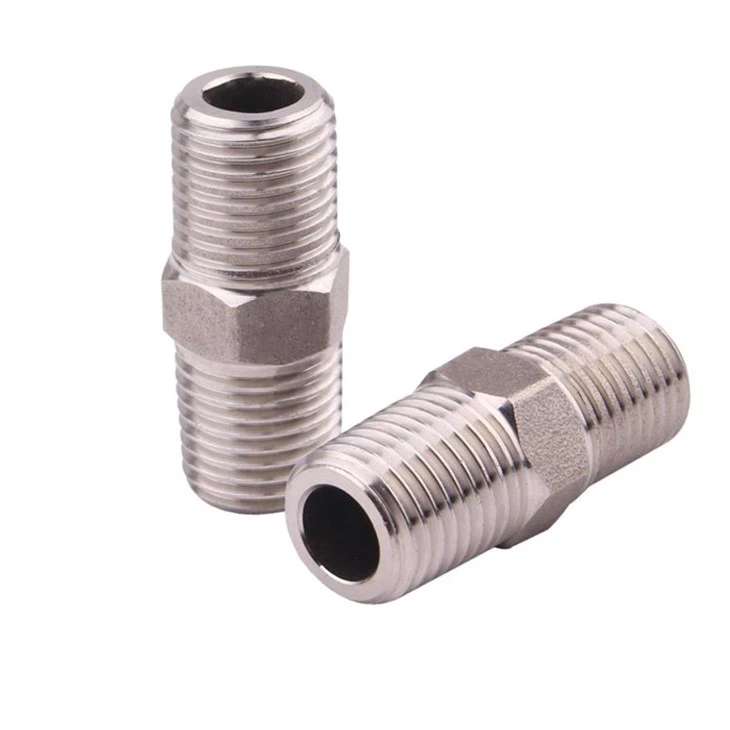
- Stainless Steel: Stainless steel is another popular choice for steel fittings due to its corrosion resistance and aesthetic appeal. It contains chromium, which forms a protective oxide layer on the surface of the steel, preventing rust and corrosion. The CTE of stainless steel is generally slightly lower than that of carbon steel, ranging from about 10 to 17 µm/m°C, depending on the specific grade. Stainless Steel Pipe Fittings Swage Nipple are commonly used in applications where hygiene and corrosion resistance are critical, such as in food and beverage processing, pharmaceutical manufacturing, and marine environments.
- Galvanized Steel: Galvanized steel is carbon steel that has been coated with a layer of zinc to protect it from corrosion. The zinc coating provides an additional barrier against rust and extends the lifespan of the fitting. The CTE of galvanized steel is similar to that of carbon steel, but the presence of the zinc coating can affect its expansion behavior slightly. Galvanized Steel Pipe Fittings are widely used in outdoor applications, such as water supply systems, fencing, and agricultural equipment.
Factors Affecting Thermal Expansion
- Temperature Range: The magnitude of thermal expansion is directly proportional to the change in temperature. As the temperature increases, the atoms in the steel vibrate more vigorously, causing the fitting to expand. Conversely, as the temperature decreases, the fitting contracts. Therefore, it's important to consider the operating temperature range of the application when selecting steel fittings.
- Fitting Geometry: The shape and size of the fitting can also affect its thermal expansion behavior. For example, a long, thin pipe will expand more than a short, thick one for the same change in temperature. Additionally, fittings with complex geometries, such as elbows and tees, may experience differential expansion, which can lead to stress concentrations and potential failure.
- Restraints and Supports: The way the fitting is installed and supported can have a significant impact on its thermal expansion. If the fitting is rigidly fixed at both ends, it may not be able to expand freely, leading to excessive stress and potential damage. On the other hand, if the fitting is allowed to move freely, it can accommodate the thermal expansion without causing any problems. Therefore, it's important to design the installation and support system to allow for thermal expansion.
Impact of Thermal Expansion on Steel Fittings
The thermal expansion of steel fittings can have several implications for their performance and reliability in various applications. Here are some of the key impacts to consider:
- Stress and Strain: When a steel fitting expands or contracts due to a change in temperature, it can experience stress and strain. If the stress exceeds the yield strength of the steel, the fitting may deform permanently or even fracture. This can lead to leaks, failures, and safety hazards in the system.
- Leakage: In applications where the steel fittings are used to connect pipes or other components, thermal expansion can cause the joints to loosen or leak. This is particularly true in high-pressure or high-temperature systems, where the forces acting on the joints are greater. To prevent leakage, it's important to use proper sealing materials and installation techniques.
- Alignment and Misalignment: Thermal expansion can also cause the fittings to move out of alignment, which can affect the performance of the system. For example, in a piping system, misaligned fittings can cause flow restrictions, increased pressure drop, and vibration. To ensure proper alignment, it's important to design the system to allow for thermal expansion and to use flexible connectors or expansion joints where necessary.
- Fatigue and Wear: Repeated cycles of thermal expansion and contraction can cause fatigue and wear in the steel fittings. Over time, this can lead to the development of cracks and other defects, which can reduce the lifespan of the fitting and increase the risk of failure. To minimize fatigue and wear, it's important to select fittings with appropriate material properties and to design the system to minimize the number of thermal cycles.
Managing Thermal Expansion in Steel Fittings
To ensure the reliable performance of steel fittings in applications where thermal expansion is a concern, it's important to take appropriate measures to manage it. Here are some strategies that can be employed:
- Select the Right Material: Choosing the appropriate type of steel with a suitable CTE for the application is crucial. Consider the operating temperature range, the required strength and durability, and the corrosion resistance of the material.
- Design for Thermal Expansion: When designing the system, allow for sufficient space for the fittings to expand and contract. This can be achieved by using flexible connectors, expansion joints, or by providing clearance between the fittings and other components.
- Use Proper Installation Techniques: Ensure that the fittings are installed correctly and that the joints are properly tightened. Use appropriate sealing materials and gaskets to prevent leakage.
- Monitor and Maintain the System: Regularly inspect the system for signs of thermal expansion-related issues, such as leaks, misalignment, or damage. Replace any worn or damaged fittings as needed.
Why Choose Us as Your Steel Fitting Supplier
As a leading steel fitting supplier, we understand the importance of thermal expansion properties in the performance and reliability of your systems. We offer a wide range of high-quality steel fittings, including Carbon Steel Pipe Fittings Elbow, Stainless Steel Pipe Fittings Swage Nipple, and Galvanized Steel Pipe Fittings, that are designed to meet the specific requirements of your applications.

Our team of experts has extensive knowledge and experience in the field of steel fittings and can provide you with professional advice and support. We work closely with you to understand your needs and to recommend the most suitable products for your project. We also offer customized solutions to meet your unique requirements.
In addition to our high-quality products and professional services, we are committed to providing competitive prices and excellent customer service. We strive to build long-term relationships with our customers based on trust, reliability, and mutual benefit.
If you're looking for a reliable steel fitting supplier who can provide you with the products and support you need, look no further. Contact us today to discuss your requirements and to start a partnership that will help you achieve your goals.
References
- ASME B31.3 Process Piping Code
- ASTM International Standards for Steel Fittings
- Machinery's Handbook, 31st Edition