Designing PPR (Polypropylene Random Copolymer) pipe systems to adapt to temperature changes is a crucial aspect of ensuring the long - term performance and reliability of plumbing installations. As a PPR pipe supplier, I have witnessed firsthand the importance of proper design in handling temperature variations. In this blog, I will share some key considerations and strategies for designing PPR pipe systems that can withstand temperature changes effectively.
Understanding the Thermal Properties of PPR Pipes
PPR pipes have unique thermal properties that need to be taken into account during the design process. PPR is a thermoplastic material, which means it expands and contracts with temperature changes. The coefficient of linear thermal expansion of PPR is approximately 0.15 - 0.20 mm/(m·°C). This means that for every 1°C change in temperature, a 1 - meter - long PPR pipe will expand or contract by about 0.15 - 0.20 mm.
When the temperature rises, the PPR pipe will expand. If there is no room for this expansion, it can lead to excessive stress in the pipe, which may cause pipe deformation, joint failure, or even pipe rupture. Conversely, when the temperature drops, the pipe will contract. Without proper design, this contraction can also lead to problems such as loosening of joints.
Design Considerations for Temperature Changes
1. Expansion Loops
One of the most effective ways to accommodate thermal expansion in PPR pipe systems is by installing expansion loops. An expansion loop is a U - shaped section of pipe that provides a flexible area for the pipe to expand and contract. The size and shape of the expansion loop depend on the length of the pipe run, the temperature range, and the pipe diameter.
For example, in a long - straight pipe run, an expansion loop can be installed at regular intervals. The distance between expansion loops can be calculated based on the maximum allowable expansion of the pipe. A general rule of thumb is to install an expansion loop every 30 - 50 meters for small - diameter pipes (up to 50 mm) and every 20 - 30 meters for larger - diameter pipes (over 50 mm).
When designing expansion loops, it is important to ensure that they are properly supported. The loop should be able to move freely without being restricted by other components in the system. Also, the bends in the expansion loop should have a sufficient radius to avoid excessive stress on the pipe.
2. Pipe Supports
Proper pipe supports are essential for PPR pipe systems exposed to temperature changes. Supports help to prevent the pipe from sagging or moving excessively during expansion and contraction. The type and spacing of pipe supports depend on the pipe diameter, the temperature range, and the installation environment.
For horizontal pipes, supports should be installed at regular intervals. The spacing between supports can be reduced in areas where the temperature changes are more significant. For example, near heat sources or in outdoor installations. Vertical pipes also need proper support to prevent them from moving or vibrating due to thermal expansion and contraction.
There are different types of pipe supports available, such as fixed supports and sliding supports. Fixed supports are used to anchor the pipe at specific points, while sliding supports allow the pipe to move freely in one direction. A combination of fixed and sliding supports can be used to control the movement of the pipe during temperature changes.
3. Joint Design
The joints in a PPR pipe system are critical areas that need to be designed to withstand temperature changes. PPR pipes are typically joined using heat - fusion welding or mechanical joints.
Heat - fusion welding creates a strong and permanent bond between the pipes. When welding PPR pipes, it is important to follow the correct welding procedure to ensure a high - quality joint. The joint should have a sufficient bead size and a proper fusion depth to prevent leakage during expansion and contraction.
Mechanical joints, on the other hand, offer some flexibility. However, they need to be properly sealed and tightened to prevent leakage. Some mechanical joints are designed with rubber gaskets that can accommodate a certain amount of movement due to temperature changes.
4. Insulation
Insulating PPR pipes can help to reduce the impact of temperature changes on the pipe system. Insulation can be used to maintain a more stable temperature inside the pipe, especially in areas where the external temperature fluctuates widely.
There are different types of insulation materials available for PPR pipes, such as foam insulation and fiberglass insulation. Foam insulation is lightweight and easy to install, while fiberglass insulation offers better thermal resistance.
Insulation should be installed properly to cover the entire length of the pipe, including the joints. It is also important to ensure that the insulation is not damaged during installation or use, as damaged insulation can reduce its effectiveness.
Case Studies
Let's look at a couple of case studies to illustrate the importance of proper design for PPR pipe systems in temperature - changing environments.

Case Study 1: A Commercial Building in a Cold Climate
In a commercial building located in a cold climate, a PPR pipe system was installed for the domestic water supply. The initial design did not take into account the significant temperature drop during the winter months. As a result, the pipes contracted, causing some of the joints to loosen and leak.
After the problem was identified, the system was redesigned. Expansion loops were added to the long - straight pipe runs, and the pipe supports were adjusted to provide better control of the pipe movement. The joints were also re - inspected and re - welded if necessary. Since then, the system has been operating without any further leakage problems.
Case Study 2: An Industrial Plant with High - Temperature Processes
In an industrial plant where high - temperature processes were involved, a PPR pipe system was used to transport hot water. The original design did not have sufficient expansion loops, and the pipe supports were not properly designed. As the temperature of the water increased, the pipes expanded, causing some sections of the pipe to deform and the joints to fail.
The plant management decided to redesign the pipe system. They installed larger expansion loops at appropriate intervals and replaced the existing pipe supports with a combination of fixed and sliding supports. The insulation of the pipes was also improved to reduce heat loss and temperature fluctuations. After the redesign, the pipe system has been able to handle the high - temperature conditions effectively.
Conclusion
Designing PPR pipe systems to adapt to temperature changes is a complex but essential task. By understanding the thermal properties of PPR pipes and implementing proper design strategies such as expansion loops, pipe supports, joint design, and insulation, we can ensure the long - term performance and reliability of the pipe system.
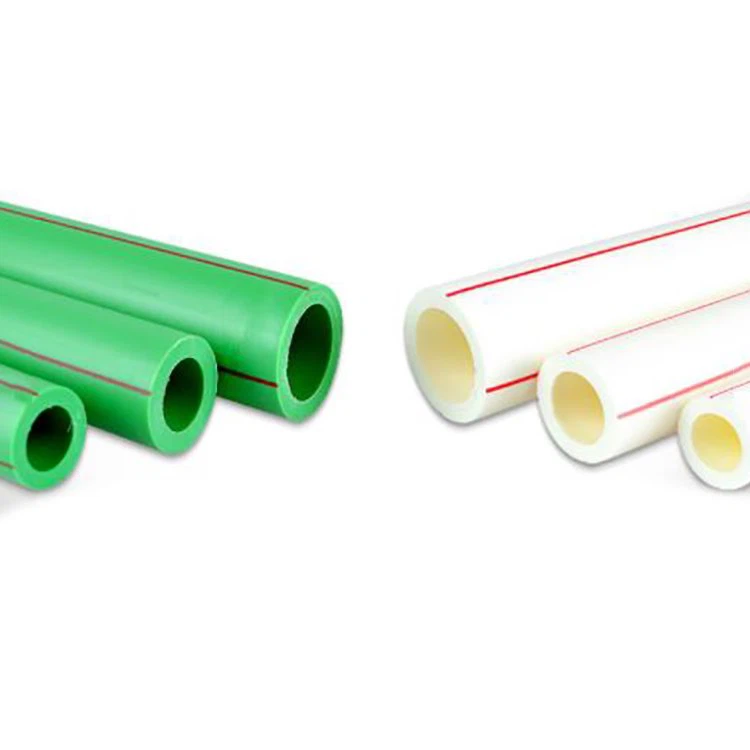
As a PPR pipe supplier, I offer a wide range of Plumbers Ppr Pipe products that are suitable for various temperature - changing environments. Our Plastic Pipe Polypropylene and Plastic Pipe Ppr are manufactured to high - quality standards and can be customized to meet your specific design requirements.
If you are planning a plumbing project that involves PPR pipes and temperature changes, I encourage you to contact me for more information and to discuss your procurement needs. I am committed to providing you with the best - quality products and professional advice to ensure the success of your project.
References
- "Handbook of Plastic Pipe Engineering" by Mohit Jain
- "Thermal Expansion in Piping Systems" by ASME
- "PPR Pipe Installation Guidelines" by various PPR pipe manufacturers