Do steel fittings need to be heat - treated? As a steel fitting supplier, I've been asked this question quite a lot. Let's dig into it and explore the ins and outs of heat treatment for steel fittings.
First off, let's understand what heat treatment is. It's a process where steel is heated and then cooled in a controlled way to change its physical and sometimes chemical properties. There are different types of heat treatments, like annealing, quenching, tempering, and normalizing, each with its own purpose.
Why Heat Treat Steel Fittings?
Improved Strength and Hardness
One of the main reasons to heat treat steel fittings is to boost their strength and hardness. When steel is quenched and tempered, it can become much stronger. For example, in applications where the fittings are going to be under high - stress conditions, like in heavy machinery or high - pressure piping systems, heat - treated steel fittings can withstand the load better. They're less likely to deform or break under stress, which is super important for safety and the long - term performance of the system.
Enhanced Ductility and Toughness
On the other hand, annealing can improve the ductility of steel fittings. Ductility means the ability of a material to be stretched or deformed without breaking. In some cases, we need steel fittings that can be bent or shaped during installation. Heat - treated fittings that have good ductility are easier to work with on the job site. And toughness, which is the ability to absorb energy during impact, is also improved in properly heat - treated steel. This is crucial in applications where the fittings might face sudden shocks or impacts.
Better Machinability
Heat treatment can also make steel fittings easier to machine. Sometimes, the as - cast or as - forged steel can be too hard or have an uneven structure, making it difficult to cut, drill, or thread. By annealing or normalizing the steel, we can achieve a more uniform grain structure, which in turn makes the machining process smoother and more efficient. This saves time and money during the manufacturing of the fittings.
When Heat Treatment Isn't Necessary
However, not all steel fittings need heat treatment. For some simple, low - stress applications, the as - manufactured properties of the steel might be sufficient. For instance, if the fittings are used in a low - pressure water - supply system where the stress levels are very low and the environment is relatively mild, heat treatment might not be cost - effective. The standard strength and corrosion resistance of the untreated steel could be enough to meet the requirements.
Our Experience as a Supplier
As a steel fitting supplier, we've seen the benefits of heat treatment in action. We've supplied Malleable Iron Pipe Fitting Connector that have been heat - treated for use in industrial plants. These connectors were used in a high - pressure steam system, and the heat - treatment process ensured that they could handle the extreme conditions without any issues.
We also offer Water Iron Fittings. For some residential water - supply projects, we've found that untreated fittings work just fine. But for larger commercial buildings or areas with higher water pressure, heat - treated water iron fittings are a better choice as they offer increased durability and reliability.
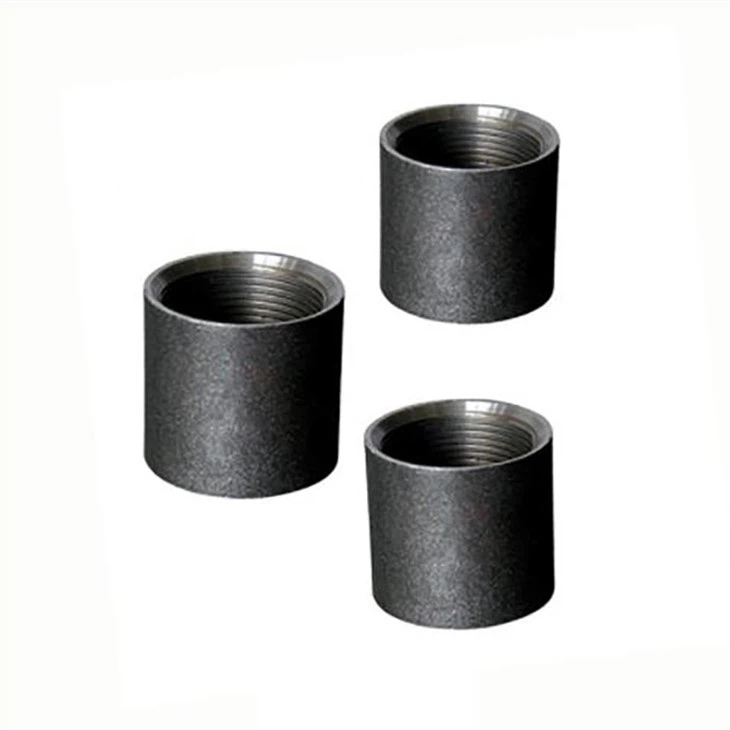
Steel Pipe Coupling Fitting is another product in our catalog. In oil and gas pipelines, where the pipes are under high pressure and the environment can be corrosive, heat - treated coupling fittings are often required. The heat treatment not only strengthens the fittings but can also improve their corrosion resistance when combined with proper coatings.
Factors to Consider Before Heat Treatment
When deciding whether to heat treat steel fittings, there are several factors to take into account.
Cost
Heat treatment is an additional step in the manufacturing process, which means it adds to the cost. We need to weigh the benefits of the improved properties against the extra expense. For some high - end, critical applications, the cost of heat treatment is negligible compared to the potential savings from reduced maintenance and replacement costs in the long run. But for budget - sensitive projects, it might not be feasible.
Application Requirements
The specific requirements of the application are crucial. If the fittings are going to be used in a high - temperature environment, heat treatment might be necessary to maintain their strength and integrity. Similarly, if there are strict requirements for corrosion resistance, heat treatment can be combined with other surface treatments to achieve the desired results.
Material Composition
The type of steel used in the fittings also plays a role. Different steels respond differently to heat treatment. Some steels are more suitable for heat treatment and can achieve significant improvements in properties, while others might not show as much improvement or could even be damaged by the heat - treatment process if not done correctly.
How We Ensure Quality
As a supplier, we work closely with our customers to understand their needs. We offer both heat - treated and non - heat - treated steel fittings. For heat - treated products, we have a strict quality control process. We use advanced testing methods to ensure that the heat - treated fittings meet the required standards. We test for hardness, strength, and ductility to make sure that they perform as expected in the real - world applications.
Contact for Purchase and Negotiation
If you're in the market for steel fittings, whether you need heat - treated or non - heat - treated ones, we're here to help. We can provide you with detailed information about our products, discuss your specific requirements, and offer competitive prices. Don't hesitate to reach out for a purchase negotiation. We're confident that we can meet your needs and provide high - quality steel fittings for your projects.

References
- ASM Handbook Volume 4: Heat Treating. ASM International.
- Steel Heat Treatment: Metallurgy and Technologies. L. C. Zhang.