As a supplier of Quick Fitting products, I often encounter questions from customers regarding the durability and performance of our fittings in various environmental conditions. One of the most frequently asked questions is whether our Quick Fitting products are resistant to UV radiation. In this blog post, I will delve into this topic, exploring the science behind UV resistance, the impact of UV radiation on Quick Fitting products, and the measures we take to ensure our fittings can withstand the harsh effects of sunlight.
Understanding UV Radiation
UV radiation is a form of electromagnetic radiation emitted by the sun. It is divided into three categories based on wavelength: UVA (320 - 400 nm), UVB (280 - 320 nm), and UVC (100 - 280 nm). UVC is mostly absorbed by the Earth's atmosphere and does not reach the surface, while UVA and UVB can penetrate the atmosphere and have significant effects on materials and living organisms.
UVA radiation is the most prevalent form of UV radiation reaching the Earth's surface. It has a longer wavelength and can penetrate deeper into materials, causing long - term damage such as discoloration, embrittlement, and loss of mechanical properties. UVB radiation, although less abundant, has a shorter wavelength and higher energy. It can cause more immediate damage to the surface of materials, including cracking and degradation.
Impact of UV Radiation on Quick Fitting Products
Quick Fitting products are used in a wide range of applications, from industrial to agricultural, and many of these applications expose the fittings to sunlight. When Quick Fitting products are exposed to UV radiation, several negative effects can occur.
Firstly, UV radiation can cause the polymer materials used in Quick Fitting products to undergo photodegradation. Polymers are long - chain molecules, and UV radiation can break the chemical bonds in these chains, leading to a reduction in molecular weight. This results in a loss of mechanical strength, making the fittings more prone to cracking and failure.
Secondly, UV radiation can cause discoloration of the fittings. Over time, the fittings may turn yellow or brown, which not only affects their aesthetic appearance but can also be an indication of underlying material degradation.
Our Approach to UV Resistance
At our company, we understand the importance of providing Quick Fitting products that can withstand the effects of UV radiation. To achieve this, we employ several strategies in the manufacturing process.

Material Selection
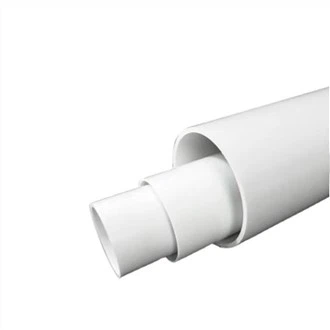
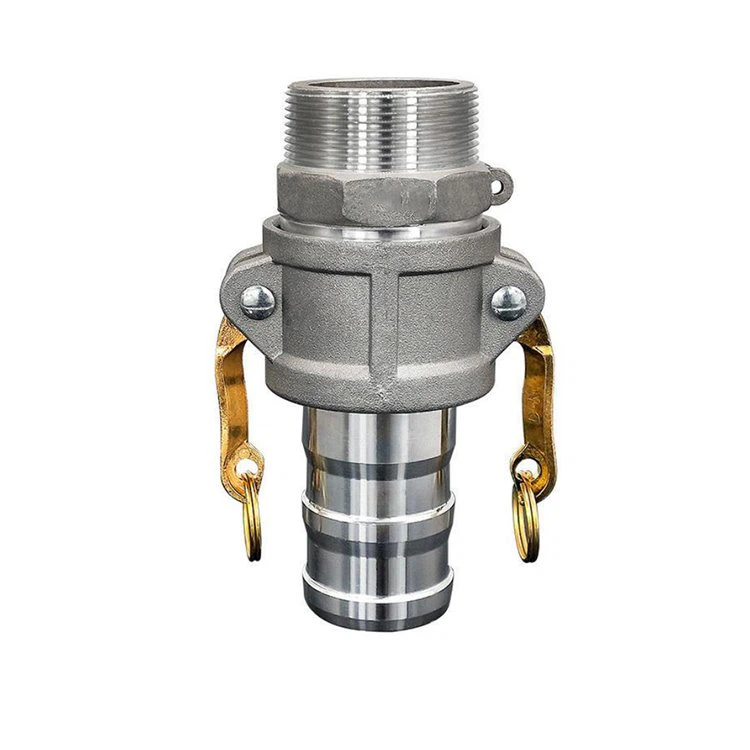
We carefully select the materials used in our Quick Fitting products to ensure they have inherent UV resistance. For example, some of our Quickly PVC Camlock Fittings are made from high - quality PVC materials that have been formulated to resist UV radiation. These materials contain additives such as UV stabilizers, which absorb and dissipate UV energy, preventing it from causing damage to the polymer chains.
Surface Treatments
In addition to material selection, we also apply surface treatments to some of our Quick Fitting products. These treatments can act as a protective barrier against UV radiation. For instance, we may use coatings that reflect or absorb UV light, reducing the amount of radiation that reaches the underlying material.
Testing and Quality Control
We conduct rigorous testing on our Quick Fitting products to ensure their UV resistance. Our testing methods include exposing the fittings to simulated sunlight in a controlled environment for extended periods. We then measure the changes in mechanical properties, such as tensile strength and elongation, as well as any discoloration or surface damage. Only products that meet our strict quality standards are released to the market.
Real - World Performance
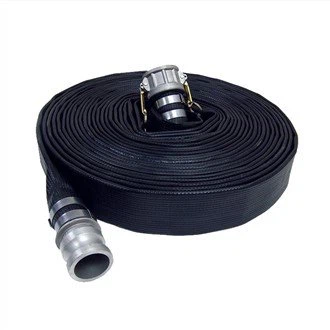
Our efforts in ensuring UV resistance have been proven in real - world applications. Many of our customers who use our Quick Fitting products in outdoor environments have reported that the fittings maintain their performance and appearance over long periods of time. For example, our 2 Inch Layflat Hose Connector has been used in agricultural irrigation systems, where it is exposed to sunlight for months on end. Customers have found that these connectors remain in good condition, with no signs of significant degradation or failure.
Conclusion
In conclusion, our Quick Fitting products are designed to be resistant to UV radiation. Through careful material selection, surface treatments, and rigorous testing, we ensure that our fittings can withstand the harsh effects of sunlight. Whether you are using our products in industrial, agricultural, or other outdoor applications, you can have confidence in the durability and performance of our Quick Fitting products.
If you are interested in learning more about our Quick Fitting products or have specific requirements for UV - resistant fittings, we encourage you to contact us for a procurement discussion. Our team of experts is ready to assist you in finding the right solutions for your needs.
References
- "Polymer Photochemistry: Principles and Applications" by J. F. Rabek
- "UV Radiation and Its Effects on Materials" by R. L. Shelden