

Steel fittings are crucial components in various industries, including construction, plumbing, and manufacturing. They are used to connect, control, and change the direction of pipes and tubes. Understanding the different end types of steel fittings is essential for ensuring proper installation and functionality. As a steel fitting supplier, I have extensive knowledge and experience in this field. In this blog, I will explore the various end types of steel fittings and their applications.
Threaded Ends
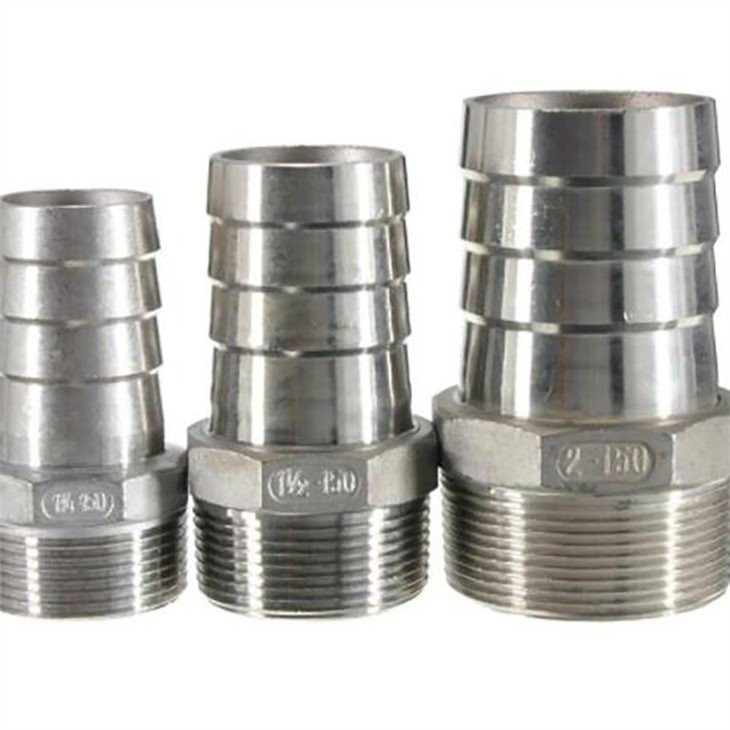
Threaded ends are one of the most common types of steel fitting ends. They feature male or female threads that allow for easy connection to other threaded components. Threaded fittings are widely used in plumbing and small - diameter piping systems. The threads can be either tapered or straight.
Tapered threads, such as NPT (National Pipe Tapered) threads, are designed to create a tight seal as they are tightened. The taper helps to compress the threads together, preventing leaks. Tapered threaded fittings are commonly used in applications where a leak - proof connection is required, such as in gas and water supply lines. For example, in a residential plumbing system, NPT threaded elbows and couplings are used to connect pipes and change the direction of the flow.
Straight threads, on the other hand, do not rely on the taper for sealing. Instead, they often require the use of a sealing compound or a gasket to prevent leaks. Straight threaded fittings are typically used in low - pressure applications or where disassembly and reassembly are frequent. For instance, in some pneumatic systems, straight threaded steel air line fittings [/fittings/steel - fitting/steel - air - line - fittings.html] are used to connect air hoses and valves.
Welded Ends
Welded ends are another popular choice for steel fittings, especially in high - pressure and high - temperature applications. Welding provides a strong and permanent connection between the fitting and the pipe. There are two main types of welded ends: butt - weld and socket - weld.
Butt - weld fittings are designed to be welded directly to the end of a pipe. The ends of the fitting and the pipe are beveled to allow for a proper weld joint. Butt - weld connections are known for their high strength and reliability. They are commonly used in industries such as oil and gas, chemical processing, and power generation. For example, in an oil refinery, large - diameter carbon steel pipe fittings elbow [/fittings/steel - fitting/carbon - steel - pipe - fittings - elbow.html] with butt - weld ends are used to change the direction of the oil pipelines.
Socket - weld fittings have a socket or recess at the end that allows the pipe to be inserted into the fitting. The joint is then welded around the circumference of the pipe. Socket - weld connections are suitable for smaller - diameter pipes and are often used in applications where space is limited. They are also relatively easy to install compared to butt - weld connections. In a small - scale chemical plant, socket - weld pipe fittings iron [/fittings/steel - fitting/pipe - fittings - iron.html] may be used to connect pipes in a compact process area.
Flanged Ends
Flanged ends are used when a connection needs to be easily disassembled or when a large - diameter pipe requires a strong and leak - proof joint. A flange is a flat, circular disc with holes around the perimeter. The flange is bolted to a corresponding flange on the pipe or another fitting.
There are several types of flanges, including weld - neck flanges, slip - on flanges, and blind flanges. Weld - neck flanges are welded to the pipe and provide a high - strength connection. They are commonly used in high - pressure and high - temperature applications. Slip - on flanges are slipped over the end of the pipe and then welded in place. They are easier to install than weld - neck flanges but may have slightly lower strength. Blind flanges are used to close the end of a pipe or a fitting.
Flanged steel fittings are widely used in industries such as water treatment, shipbuilding, and HVAC (Heating, Ventilation, and Air Conditioning). In a water treatment plant, flanged valves and pipe fittings are used to control the flow of water and chemicals. The flanged connections allow for easy maintenance and replacement of components.
Compression Ends
Compression ends are designed to create a tight seal by compressing a ring or ferrule onto the pipe. Compression fittings are easy to install and do not require special tools or welding. They are commonly used in plumbing and small - diameter tubing applications.
There are two main types of compression fittings: single - ferrule and double - ferrule. Single - ferrule compression fittings have one ferrule that is compressed onto the pipe. Double - ferrule compression fittings have two ferrules, which provide a more reliable and leak - proof connection. Compression fittings are often used in applications where flexibility and ease of installation are important, such as in household plumbing repairs.
Grooved Ends
Grooved ends are used in systems that require quick and easy installation and disassembly. Grooved fittings have a groove cut into the end of the fitting, which allows for the use of a coupling. The coupling is placed over the grooved ends of the fitting and the pipe, and then tightened to create a seal.
Grooved steel fittings are commonly used in fire protection systems, sprinkler systems, and large - diameter piping systems. In a commercial building's fire protection system, grooved pipe fittings are used to connect the pipes quickly and efficiently. The grooved connection allows for easy modification and expansion of the system.
Conclusion
In conclusion, there are several different end types of steel fittings, each with its own advantages and applications. Threaded ends are suitable for easy installation and low - pressure applications. Welded ends provide a strong and permanent connection for high - pressure and high - temperature systems. Flanged ends allow for easy disassembly and are used in large - diameter and critical applications. Compression ends offer flexibility and ease of installation, while grooved ends are ideal for quick and efficient connections.
As a steel fitting supplier, I can provide a wide range of steel fittings with different end types to meet your specific needs. Whether you are working on a small plumbing project or a large industrial installation, I have the expertise and products to ensure a successful outcome. If you are interested in purchasing steel fittings or have any questions about the different end types, please feel free to contact me for a detailed discussion and to start the procurement process.

References
- "Pipe Fittings Handbook" by Pipe Fittings Institute
- "Welding Handbook" by American Welding Society
- Industry standards and guidelines for steel fittings, such as ASTM, ASME, and ISO.
